Can Several Minor Vehicle Defects Add Up to a Lemon Law Claim?
This article explains how several minor vehicle defects may collectively support a lemon law claim if they significantly affect a vehicle’s use, value, or safety. It highlights the importance of repeated unsuccessful repair attempts, extended vehicle downtime, and proper documentation. Vehicle owners should maintain detailed repair records, review applicable legal requirements, and seek legal guidance to understand their eligibility and available remedies.
By Vishal

Buying a new vehicle should provide peace of mind, reliable transportation, and confidence in its performance. However, some owners experience a series of seemingly minor problems shortly after purchasing a vehicle. These issues may include malfunctioning sensors, faulty electronics, recurring warning lights, unusual noises, or problems with the air conditioning system.
Individually, these defects might appear too minor to justify a lemon law claim. However, when several problems occur together, repeatedly require repairs, or interfere with the vehicle's normal operation, the overall situation may become more serious.
Several minor vehicle defects may support a lemon law claim if their combined effect substantially affects the vehicle's use, value, or safety and the applicable legal requirements are satisfied. The number of defects alone does not determine eligibility. Their impact, repair history, warranty coverage, and the manufacturer's opportunity to address them are also important.
How Does Lemon Law Evaluate Multiple Vehicle Defects?
Lemon laws generally protect eligible vehicle buyers when a manufacturer cannot correct qualifying defects within a reasonable number of repair attempts. The specific requirements vary depending on the applicable law, including which vehicles are covered, how defects are assessed, and what repair history is required.
Why Individual Defects May Matter Together
A minor defect does not always create a substantial problem on its own. However, multiple defects can collectively make a vehicle unreliable, inconvenient, or less valuable than expected.
For example, consider a vehicle experiencing the following issues:
The infotainment system frequently freezes.
Parking sensors provide inconsistent warnings.
The air conditioning occasionally stops cooling.
Dashboard warning lights appear without a clear explanation.
Power windows intermittently fail to operate.
Each problem may seem manageable individually. However, repeated failures, unsuccessful repairs, and ongoing disruptions can create a broader reliability concern.
The important question is whether the combined effect of these defects meets the applicable legal standard. A collection of cosmetic imperfections or minor inconveniences may not qualify simply because several exist at once.
What Does Substantial Impairment Mean?
Substantial impairment generally refers to a meaningful effect on a vehicle's use, value, or safety. The exact legal standard depends on the jurisdiction and circumstances of the claim.
Factors that may help establish substantial impairment include:
Use: Defects prevent the owner from using essential vehicle features or make the vehicle unreliable for ordinary transportation.
Value: Recurring problems significantly affect the vehicle's resale value or overall desirability.
Safety: Defects interfere with braking assistance, steering, visibility, warning systems, or other safety-related functions.
Reliability: Repeated malfunctions create ongoing uncertainty about whether the vehicle will operate as expected.
A defect that appears minor may deserve closer attention when it affects an important system or occurs alongside other persistent problems.
When Can Several Minor Defects Strengthen a Lemon Law Claim?
Multiple defects may strengthen a claim when the evidence shows that the vehicle has persistent problems that the manufacturer has not successfully corrected.
Repeated Repair Attempts
A vehicle owner may visit an authorized repair facility several times for different issues. If the problems continue despite repeated repair attempts, the repair history may help demonstrate that the vehicle does not conform to its warranty.
For instance, a vehicle might require repeated visits to address electrical faults, sensor failures, and recurring warning lights. Even if technicians temporarily resolve individual symptoms, the problems may return or new covered defects may emerge.
The number of visits can matter, but the applicable law determines how repair attempts are counted. Some laws focus on repeated attempts to fix the same defect, while others may consider multiple defects or the cumulative time the vehicle spends out of service.
Extended Time Without the Vehicle
Another important consideration is the amount of time a vehicle remains unavailable because of repairs.
Several unrelated defects can result in multiple service appointments, replacement parts, diagnostic testing, and delays. When these visits accumulate, the owner may lose substantial use of the vehicle.
Keep records showing:
The date the vehicle entered the repair facility.
The date it was returned.
The problem reported during each visit.
Any delays caused by parts availability or additional diagnosis.
Whether the vehicle remained usable while the problem was being investigated.
Cumulative downtime may be relevant under certain lemon laws, although the applicable threshold and counting rules vary.
What Types of Minor Defects May Contribute to a Claim?
Not every vehicle issue carries the same legal significance. The nature of each defect and its combined effect on the vehicle are important.
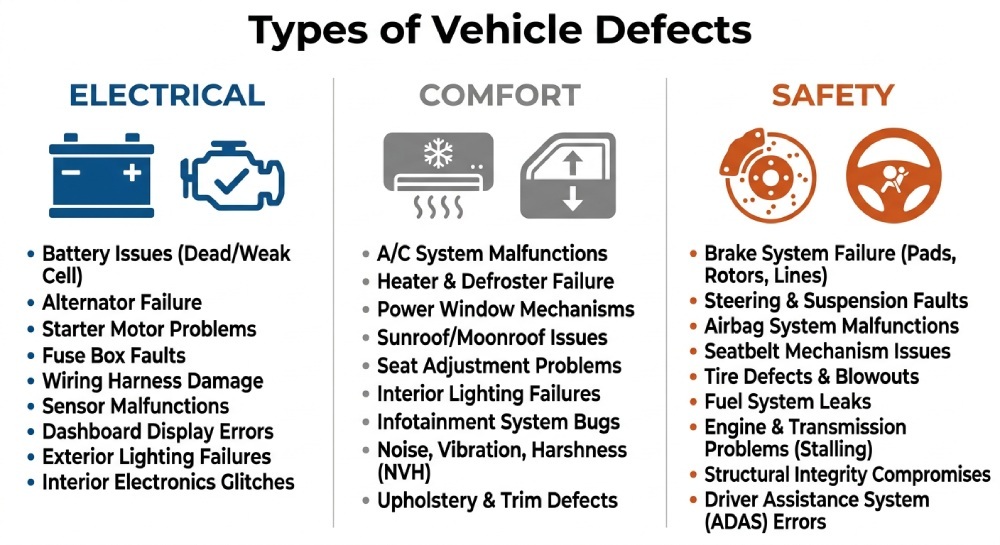
Electrical and Electronic Problems
Modern vehicles rely on electronic systems for convenience, performance, and safety. Recurring electrical problems may include malfunctioning displays, faulty sensors, intermittent starting issues, or unexplained warning lights.
A single infotainment glitch may have limited significance. However, repeated electrical failures affecting several systems could indicate a broader reliability problem, particularly when repairs do not resolve the underlying issue.
Comfort and Convenience Defects
Problems involving climate control, power windows, seat adjustments, locks, or entertainment systems can reduce a vehicle's usability.
Whether these defects support a claim depends on their severity and cumulative impact. An occasional inconvenience may not be enough, while persistent failures that substantially interfere with normal use or value may deserve further evaluation.
Problems Affecting Safety
Some defects should never be dismissed as minor simply because they occur intermittently.
Examples include inconsistent braking performance, steering difficulties, faulty backup cameras, or warning systems that fail to operate properly.
Safety-related problems may receive different treatment under applicable lemon laws. Owners should promptly report them, follow appropriate safety guidance, and avoid driving a vehicle that may be unsafe.
How to Document Multiple Vehicle Defects
Good documentation can help establish how the problems developed, how frequently they occurred, and whether repair attempts were successful.
Keep Detailed Repair Records
Request a copy of the repair order every time the vehicle enters an authorized repair facility. Review the paperwork to confirm that each reported concern is recorded accurately.
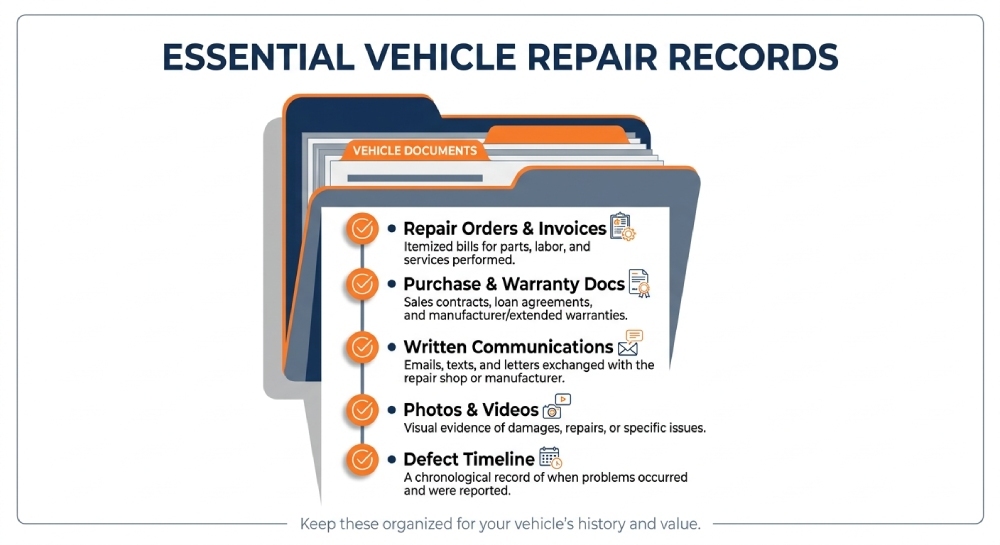
Maintain a file containing:
Purchase or lease documents and warranty information.
Repair orders, invoices, and diagnostic reports.
Written communications with the dealership and manufacturer.
Photos or videos showing observable problems, when safe to obtain.
A timeline of recurring defects and days spent in the repair shop.
If a technician cannot reproduce a problem, ask that your description of the symptoms still be documented.
Notify the Manufacturer When Appropriate
Depending on the applicable law and warranty terms, written notice to the manufacturer may be required before pursuing certain remedies. Some laws also provide specific procedures for giving the manufacturer a final opportunity to repair the vehicle.
Do not assume that dealership visits alone satisfy every legal notice requirement. Review the relevant procedures and deadlines, and retain copies of all communications.
What Happens If the Defects Continue?
If multiple defects remain unresolved, the next step is to assess the vehicle's repair history against the applicable lemon law requirements.
Review Eligibility and Available Remedies
Depending on the circumstances, an eligible owner may be entitled to a manufacturer repurchase, a replacement vehicle, or another remedy provided by law.
Eligibility can depend on several factors, including:
Whether the vehicle is covered by the applicable law.
Whether the defects fall within the relevant warranty or protection period.
Whether the manufacturer received a reasonable opportunity to repair the problems.
Whether the defects substantially impair use, value, or safety.
Whether required notice, dispute resolution, and filing deadlines have been satisfied.
A vehicle with several minor problems does not automatically qualify. However, a documented pattern of recurring defects and unsuccessful repairs may justify a closer review.

Consider Getting Legal Guidance
A qualified lemon law lawyer can review the repair records, identify potentially relevant legal requirements, and explain whether the combined effect of the defects may support a claim.
Seeking guidance before important deadlines expire can help owners understand their options and avoid overlooking procedural requirements.
Conclusion
Several minor vehicle defects can potentially add up to a lemon law claim when their combined effect substantially affects the vehicle's use, value, or safety. Recurring electrical problems, malfunctioning convenience features, repeated repair visits, and extended periods without the vehicle may all contribute to the overall picture.
However, the number of defects alone is not decisive. The applicable law, warranty coverage, severity of the problems, repair history, and supporting documentation all matter.
Vehicle owners should report defects promptly, keep complete repair records, and review their legal options if the problems persist. A careful assessment of the entire repair history can help determine whether multiple seemingly minor issues amount to a legally significant vehicle defect claim.
- write for me an tags on this article lemon law
- minor vehicle defects
- vehicle defect claims
- lemon law eligibility
- repeated repair attempts
- vehicle warranty
- vehicle repair records
- vehicle safety issues
- manufacturer repurchase
- lemon law claim
Think you've got a lemon?
Compare your situation to your state's requirements — and connect with a vetted lemon-law attorney for a free case review.