Can A Vehicle Still Qualify For Lemon Law Protection After Its Warranty Expires?
A vehicle may still qualify for lemon law protection after its manufacturer's warranty expires, especially if the defect first appeared during the warranty period and continued despite multiple repair attempts. Eligibility depends on the defect's severity, repair history, manufacturer notification, and applicable legal deadlines. Keeping detailed service records and consulting a qualified lemon law attorney can help vehicle owners understand their available legal options.
By Vishal
Buying a vehicle is a significant investment, and owners naturally expect it to provide reliable performance for years. However, some vehicles develop recurring mechanical, electrical, or safety-related defects that continue despite multiple repair attempts. These issues can become especially frustrating when they remain unresolved until after the manufacturer's warranty expires.
One common concern among vehicle owners is whether they lose their right to seek lemon law protection once their warranty ends. The answer is not always straightforward. In some situations, a vehicle may still qualify for lemon law protection even after the original warranty has expired. Eligibility often depends on when the defect first appeared, how frequently the vehicle required repairs, the manufacturer's opportunity to correct the problem, and the applicable legal requirements.
Understanding how warranty expiration affects lemon law claims can help vehicle owners recognize their options and determine what steps to take next.
Does an Expired Warranty Automatically End Lemon Law Protection?
No. An expired manufacturer's warranty does not automatically eliminate every possible lemon law claim. Warranty coverage and lemon law protection serve different purposes, even though they can overlap.
A manufacturer's warranty generally outlines the repairs and replacements the manufacturer agrees to cover during a specified period or mileage limit. Lemon laws, on the other hand, provide legal protections for consumers who purchase or lease vehicles with substantial defects that the manufacturer cannot adequately repair.
This distinction matters because a defect may develop while the vehicle is still covered by warranty but remain unresolved after the coverage period ends.
For example, consider a vehicle that experiences repeated transmission problems during its warranty period. The owner takes it to an authorized dealership several times, but the same issue continues. If the warranty expires before the manufacturer resolves the defect, the owner may still have grounds to explore a lemon law claim.
However, the specific circumstances and applicable legal deadlines determine whether protection remains available.
When Can a Vehicle Qualify for Lemon Law Protection After Warranty Expiration?
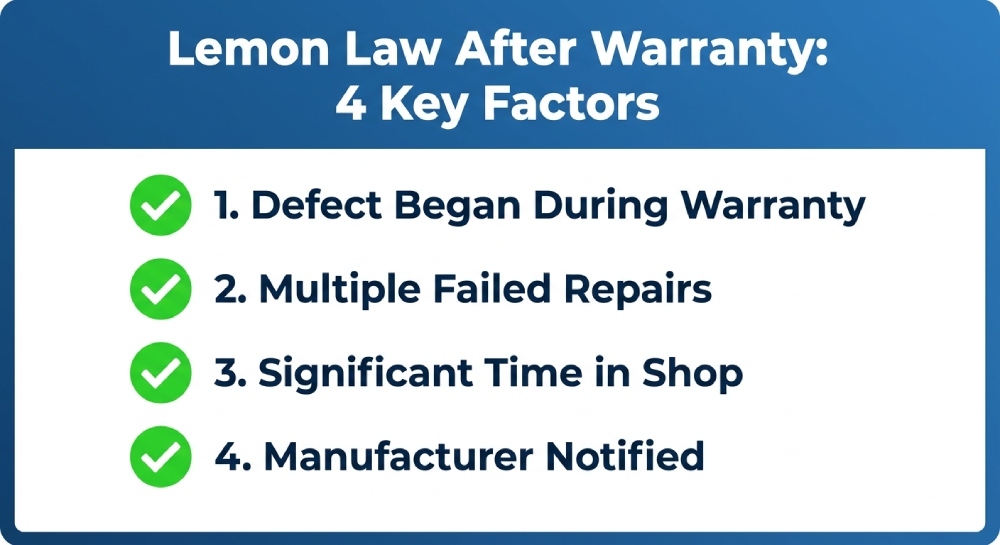
Several circumstances may support a potential lemon law claim even when the vehicle is no longer covered by its original warranty.
1. The Defect First Appeared During the Warranty Period
The timing of the original problem can be important when evaluating a claim.
If a substantial defect appeared while the vehicle was covered by the manufacturer's warranty, the owner may have a stronger basis for arguing that the manufacturer had an opportunity to address the issue before coverage expired.
Examples include:
- Recurring engine overheating.
- Transmission slipping or shifting problems.
- Electrical system malfunctions.
- Persistent brake performance issues.
- Steering or suspension defects.
- Repeated failures involving important vehicle safety systems.
Keeping records of the first repair visit and subsequent service appointments can help establish when the problem began.
2. Multiple Repair Attempts Failed to Resolve the Problem
Repeated unsuccessful repair attempts can be an important factor in determining whether a vehicle qualifies for lemon law protection.
Manufacturers generally receive a reasonable opportunity to repair a qualifying defect. However, when the same issue continues despite multiple attempts, it may indicate that the vehicle does not conform to applicable warranty or performance requirements.
For example, a vehicle owner might visit a dealership four times because of recurring engine stalling. Each visit results in a temporary improvement, but the problem eventually returns.
Even if the vehicle's warranty expires after the fourth visit, the earlier repair history may remain relevant when evaluating a potential claim.
3. The Vehicle Spent Significant Time at the Repair Facility
A vehicle does not necessarily need to experience the same problem repeatedly to raise lemon law concerns.
In some situations, extended periods out of service because of repairs can also matter.
Consider a vehicle that experiences several unrelated mechanical failures during its warranty period. Each issue requires extensive diagnostic work, replacement parts, or repeated dealership visits.
The accumulated repair time may become relevant when assessing whether the vehicle meets applicable lemon law requirements.
Owners should maintain records showing:
- The dates the vehicle entered and left the repair facility.
- The nature of each reported problem.
- The repairs were performed.
- Any delays caused by unavailable replacement parts.
- Whether the vehicle was safe and usable during the repair process.
4. The Manufacturer Was Notified but Failed to Provide an Effective Solution
Communication with the manufacturer can also play an important role.
When a dealership cannot resolve a recurring defect, contacting the manufacturer's customer assistance department may help establish that the company received notice of the issue.
Owners should retain copies of emails, complaint reference numbers, written responses, and other communications.
A manufacturer's awareness of an unresolved problem may become relevant when determining whether it received an adequate opportunity to address the defect.
What Factors Can Affect a Lemon Law Claim After Warranty Expiration?
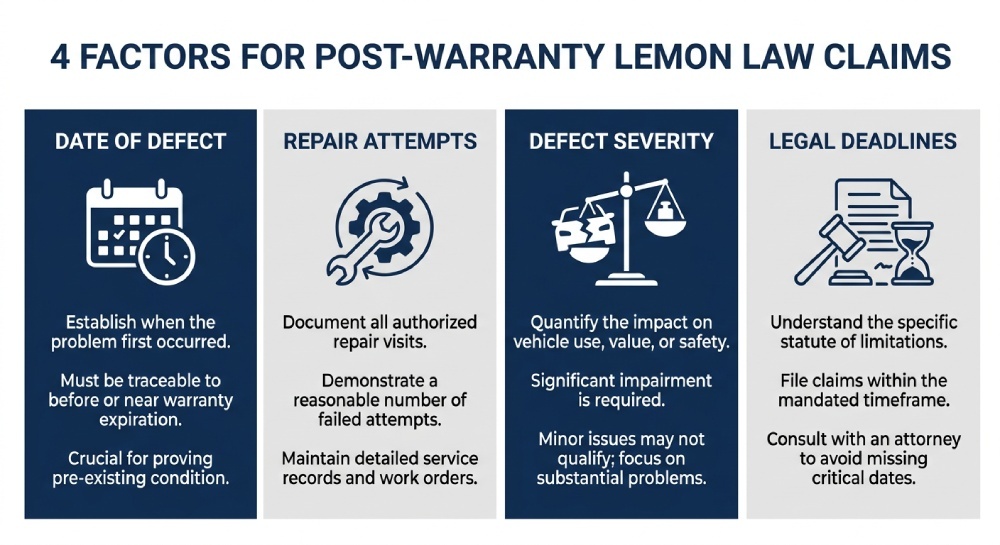
An expired warranty does not automatically establish eligibility. Several factors may influence whether a claim remains possible.
The Date the Defect First Appeared
The original date of the defect can help establish whether the issue developed during the applicable warranty period.
Repair invoices, dealership records, and service appointment confirmations can provide useful evidence.
The Number of Repair Attempts
The number of unsuccessful repair attempts may help demonstrate that the manufacturer could not correct the problem.
However, there is no single repair-attempt requirement that applies to every situation. Applicable laws may consider the nature and seriousness of the defect.
The Severity of the Defect
A minor cosmetic issue may be treated differently from a recurring engine failure or braking malfunction.
Problems affecting vehicle safety, reliability, value, or normal operation may receive greater consideration depending on the applicable legal standards.
Applicable Legal Deadlines
Even when a defect first appeared during warranty coverage, a consumer may face separate legal deadlines for bringing a claim.
These deadlines can depend on factors such as the purchase or lease date, warranty terms, repair history, and applicable statutes.
Vehicle owners should avoid assuming that an unresolved repair automatically gives them unlimited time to pursue legal action.
What Documents Should You Keep After Your Warranty Expires?
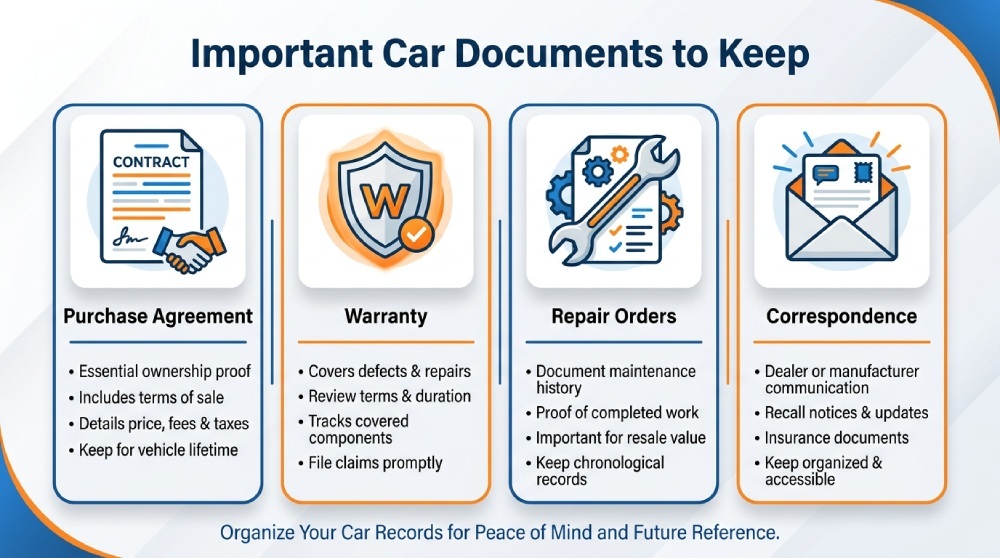
Documentation can make a significant difference when evaluating a potential lemon law claim.
Even after warranty coverage ends, owners should preserve records showing the vehicle's repair history and the manufacturer's response.
Important documents include:
- Purchase or lease agreement: Establishes the original transaction details.
- Manufacturer's warranty: Identifies the original coverage terms.
- Repair orders: Shows reported defects and attempted repairs.
- Service invoices: Provides evidence of work completed by dealerships or repair facilities.
- Manufacturer correspondence: Documents complaints and responses.
- Diagnostic reports: Helps identify recurring mechanical or electrical problems.
- Towing and rental receipts: May help document additional expenses associated with vehicle failures.
Organizing these documents chronologically can make it easier to identify patterns and explain how long a problem has continued.
Can You File a Lemon Law Claim for a Problem That Appeared Only After Warranty Expiration?
This situation can be more complicated.
If a defect first develops after the manufacturer's warranty has expired, establishing a lemon law claim may be more difficult. Many lemon laws focus on defects that arise during a legally relevant warranty or protection period.
However, the expiration of a warranty does not necessarily answer every legal question.
The circumstances surrounding the defect, the type of warranty involved, applicable consumer protection laws, and any separate legal deadlines may influence the available options.
For instance, a vehicle owner might discover a serious engine problem shortly after warranty expiration. If there were earlier warning signs, dealership visits, or documented complaints involving the same underlying issue, those records may deserve closer examination.
A qualified lemon law attorney can review the circumstances and determine whether any legal remedies remain available.
What Should You Do If Your Vehicle Still Has Problems After Warranty Expiration?
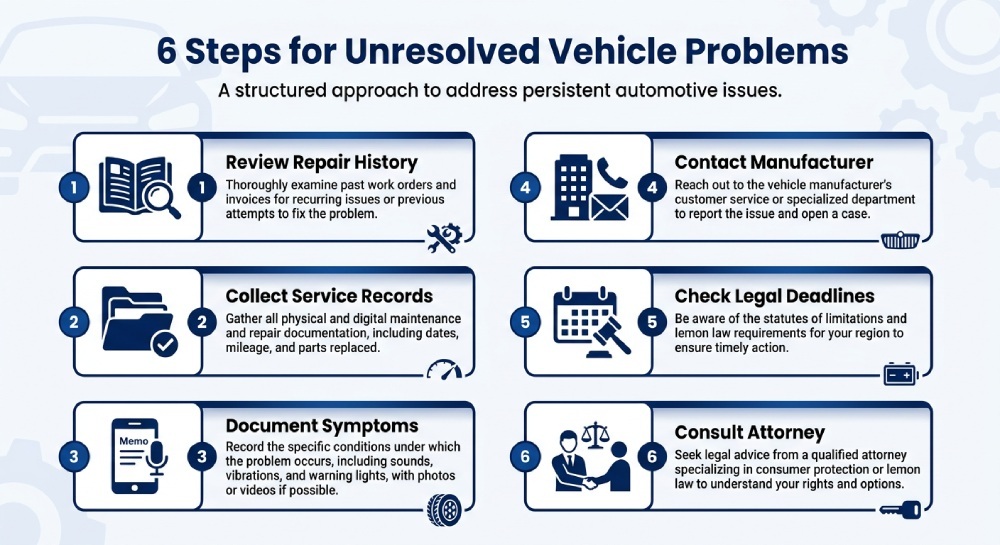
If your vehicle continues experiencing recurring problems, taking organized and timely action can help protect your interests.
Consider the following steps:
Review your repair history: Identify when the original problem appeared and how many times the vehicle was taken in for repairs.
Collect all service records: Request copies of repair orders, diagnostic reports, and dealership invoices.
Document ongoing symptoms: Record when the problem occurs, how frequently it happens, and whether it affects vehicle safety or performance.
Contact the manufacturer: Ask for written clarification about unresolved defects and any available assistance.
Avoid unnecessary delays: Research applicable legal deadlines before assuming that you still have unlimited time.
Consult a lemon law attorney: Have an experienced professional review your vehicle's history and explain whether a potential claim exists.
Taking these steps can help establish a clearer picture of the vehicle's condition and the manufacturer's repair efforts.
Frequently Asked Questions
Does a lemon law claim automatically become invalid when the warranty expires?
No. Warranty expiration does not automatically invalidate every potential claim. The timing of the defect, previous repair attempts, and applicable legal requirements may still support a claim.
Can I pursue a claim if the dealership tried to repair my vehicle several times under warranty?
Potentially. Multiple unsuccessful repair attempts may provide important evidence that the manufacturer had an opportunity to correct a qualifying defect but failed to do so.
What if my vehicle developed a new problem after the warranty expired?
A newly developed defect may be more difficult to address through lemon law protections. Eligibility depends on the nature of the problem, applicable warranty requirements, and relevant consumer protection laws.
Do I need repair records to pursue a lemon law claim?
Repair records are extremely helpful. They can establish when a defect first appeared, how many repair attempts occurred, and whether the manufacturer had an opportunity to resolve the problem.
Final Thoughts
A vehicle's warranty expiration does not necessarily mean that every opportunity for lemon law protection has disappeared. If a serious defect first appeared during the applicable coverage period and continued despite repeated repair attempts, the vehicle owner may still have options worth exploring.
The most important factors are often the timing of the defect, the vehicle's repair history, the seriousness of the problem, and the legal deadlines that apply.
Rather than assuming that an expired warranty ends your rights, consider having your situation evaluated by a qualified lemon law attorney. Reviewing your documentation and understanding the applicable legal requirements can help you determine the most appropriate next step.
- lemonlaw
- lemonlawprotection
- expiredwarranty
- vehiclewarranty
- lemonlawclaims
- carrepairissues
- manufacturerwarranty
- vehicledefects
- repairhistory
- consumerprotection
Think you've got a lemon?
Compare your situation to your state's requirements — and connect with a vetted lemon-law attorney for a free case review.