Can a Vehicle's Lemon Law Case Be Affected by a Defect That Appears Only in Extreme Heat?
A vehicle defect that appears only in extreme heat may still support a lemon law claim if it substantially affects the vehicle’s safety, use, or value. Learn how to document recurring problems, preserve repair records, and understand the legal requirements for evaluating potential lemon law remedies.
By Vishal
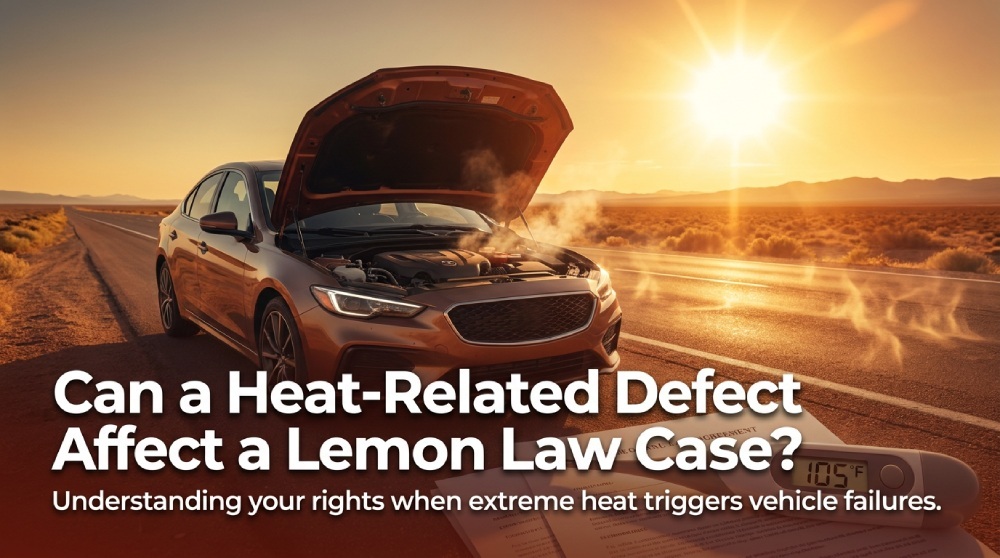
A vehicle may operate normally during mild weather but develop serious problems when temperatures rise. For example, the engine might overheat, the air conditioning might stop working, or the transmission might behave unpredictably after the vehicle has been parked in direct sunlight or driven for an extended period in hot conditions. Because these problems may disappear when temperatures drop, identifying and repairing them can become challenging.
When a manufacturer or dealership cannot resolve a recurring vehicle defect, the owner may wonder whether the problem could affect a lemon law claim. A defect that appears only in extreme heat can potentially support a lemon law case, provided the issue qualifies under the applicable law and the owner can establish that it substantially affects the vehicle's use, value, or safety.
Understanding how heat-related defects are documented, diagnosed, and evaluated can help vehicle owners determine their next steps.
How Extreme Heat Can Trigger Vehicle Defects
High temperatures place additional stress on a vehicle's mechanical, electrical, and cooling systems. Components that appear to function correctly in moderate weather may malfunction when exposed to sustained heat.
Common Heat-Related Vehicle Problems
Several types of defects may become noticeable only during hot weather, including:
Engine overheating: The engine temperature rises beyond its normal operating range, potentially causing reduced performance or engine damage.
Air conditioning failure: The cooling system produces warm air, stops cooling intermittently, or shuts down during hot conditions.
Transmission problems: The transmission slips, shifts roughly, or struggles after prolonged driving in high temperatures.
Electrical system malfunctions: Sensors, displays, warning lights, or electronic controls behave unpredictably.
Battery and starting issues: The vehicle experiences starting difficulties or electrical interruptions associated with heat-sensitive components.
Power loss: The engine reduces power or enters a protective operating mode to prevent damage.
Not every heat-related problem indicates a manufacturing defect. Some issues may result from insufficient maintenance, normal wear, or external conditions. A qualified technician can help determine whether the underlying cause involves a defective component or system.
Why Some Defects Appear Only in Hot Weather
Extreme heat can expose weaknesses that remain hidden during ordinary driving. Cooling systems may struggle to maintain proper temperatures, electronic components may become unstable, and materials may expand as they heat up.
A defect may also require a specific combination of conditions, such as prolonged driving, heavy traffic, high outdoor temperatures, or extended exposure to direct sunlight.
These circumstances can make the problem difficult to reproduce during a short dealership inspection. However, the fact that a technician cannot immediately duplicate the issue does not automatically mean the defect is nonexistent.
Can a Heat-Related Defect Affect a Lemon Law Case?
Yes. A recurring defect that appears only in extreme heat may be relevant to a lemon law claim. The important consideration is generally the seriousness of the problem, its underlying cause, the repair history, and the requirements of the applicable law.
The Defect Must Meet Applicable Legal Requirements
Lemon laws generally provide remedies for qualifying vehicles with certain defects that manufacturers or authorized repair facilities cannot successfully resolve within the legally required circumstances.
Depending on the applicable law, relevant considerations may include:
Whether the defect substantially affects the vehicle's use, value, or safety.
Whether the manufacturer or dealership has received a reasonable opportunity to repair the problem.
Whether the vehicle has spent a qualifying amount of time out of service for repairs.
Whether the vehicle and its warranty fall within the law's coverage requirements.
A temporary air conditioning problem and an engine defect that creates a serious overheating risk may receive different evaluations. The specific facts matter, and not every inconvenience or isolated malfunction qualifies for legal protection.
Intermittent Problems Can Still Be Significant
A defect does not necessarily need to occur every time the vehicle is driven to be important.
For example, a vehicle might operate normally in the morning but lose engine power during afternoon traffic. If the problem repeatedly occurs under similar conditions and affects safe operation, it may warrant further investigation.
The key is to establish a connection between the reported symptoms and an underlying defect rather than relying solely on the fact that the vehicle performs poorly in hot weather.
How to Document a Defect That Appears Only in Extreme Heat
Accurate documentation can help demonstrate that a problem is recurring, even when it cannot be reproduced during every inspection.
Keep a Detailed Record of Each Incident
Record the circumstances surrounding each malfunction. Include the date, approximate outdoor temperature, driving duration, vehicle speed, warning messages, and symptoms observed.
Useful evidence may include:
Photographs or videos of dashboard warning lights and temperature readings.
Copies of repair orders and dealership inspection reports.
Records of when the vehicle was taken in for repairs and returned.
Notes describing how the defect affected driving or vehicle operation.
Relevant communications with the dealership or manufacturer.
Avoid recording information while driving if doing so would create a safety risk. Ask a passenger to document the issue or record details after stopping safely.
Tell the Dealership Exactly When the Problem Occurs
When requesting repairs, explain the conditions that trigger the malfunction. For example, mention whether the issue appears after an hour of driving, during stop-and-go traffic, or after the vehicle has been exposed to direct sunlight.
Ask the repair facility to record your description on the repair order. If the problem cannot be reproduced, request that the technician document your complaint and any diagnostic steps performed.
This creates a more complete repair history than a record stating only that the vehicle was inspected and no issue was found.
What If the Dealership Cannot Reproduce the Defect?
A dealership may be unable to identify a heat-related malfunction if the vehicle is inspected during cooler weather or under different driving conditions.
Request Appropriate Diagnostic Testing
Depending on the symptoms, a technician may need to examine temperature-related sensor readings, cooling system performance, electrical connections, transmission operation, or stored diagnostic trouble codes.
Some problems may require testing under conditions similar to those in which the defect occurs. The appropriate procedure depends on the suspected failure and the manufacturer's diagnostic guidance.
Preserve Every Repair Attempt
Even when no repair is completed, retain the paperwork from each dealership visit. A documented complaint can help establish that the manufacturer or repair facility was notified of the problem.
Do not assume that an unsuccessful inspection automatically counts as a qualifying repair attempt under every lemon law. The legal significance depends on the applicable requirements and the circumstances of the visit.
Can Repeated Heat-Related Failures Strengthen a Claim?
Repeated failures may help establish a pattern, particularly when the same symptoms return after multiple repair attempts.
For example, suppose a vehicle repeatedly overheats during hot-weather driving despite several visits to an authorized repair facility. Repair records, diagnostic findings, and consistent incident notes may help demonstrate that the issue remains unresolved.
However, repeated complaints alone do not guarantee a successful claim. Evidence must support the existence of a qualifying defect, and the applicable legal requirements must be satisfied.
Vehicle owners should also follow manufacturer maintenance recommendations and avoid continued driving when overheating, power loss, or another dangerous malfunction occurs.
When Should You Seek Legal Guidance?
Consider consulting a qualified lemon law attorney if a significant heat-related defect continues despite repair attempts, the dealership repeatedly reports that it cannot reproduce the problem, or the vehicle remains unreliable or unsafe.
An attorney can review the warranty, repair history, available evidence, and applicable legal requirements to assess potential options. Depending on the circumstances, possible remedies under the relevant law may include a repurchase, replacement, or other legally available relief.
Keep copies of all relevant documents and avoid making assumptions about eligibility before the facts have been reviewed.
Final Thoughts
A vehicle defect that appears only in extreme heat can still be relevant to a lemon law case. Intermittent overheating, transmission malfunctions, electrical failures, and other recurring problems may warrant attention when they affect vehicle safety, use, or value.
The most important steps are to document the symptoms, report the problem clearly, preserve repair records, and understand the requirements of the applicable lemon law. Even if the defect disappears during a dealership inspection, consistent evidence may help establish what is happening and support an informed evaluation of the available legal options.
- lemon law
- heat-related vehicle defects
- vehicle defects
- car overheating
- recurring vehicle problems
- lemon law claims
- vehicle repair records
- automotive defects
- warranty claims
- vehicle safety
Think you've got a lemon?
Compare your situation to your state's requirements — and connect with a vetted lemon-law attorney for a free case review.