9 Things Your Repair Order Can Reveal About Your Lemon Law Case
Repair orders can provide valuable evidence in a potential lemon law case by documenting recurring defects, repair attempts, diagnostic findings, vehicle downtime, and safety concerns. Reviewing and organizing these records can help identify unresolved problems, highlight inconsistencies, and prepare vehicle owners for a more informed discussion with a qualified lemon law attorney about their legal options.
By Vishal

A repair order is more than a receipt for vehicle service. It is an important document that records reported problems, diagnostic findings, repairs performed, and the history of a vehicle's mechanical or electrical issues. When a vehicle experiences recurring defects, repair orders can help establish what went wrong, how often the problem occurred, and whether previous repair attempts resolved it.
For vehicle owners dealing with persistent problems, reviewing repair orders can provide valuable insight into a potential lemon law case. Understanding the information contained in these records can help identify patterns, document repair attempts, and determine what additional evidence may be needed.
1. The Nature of the Vehicle Defect
One of the first things a repair order can reveal is the specific problem affecting your vehicle. The document may describe symptoms reported by the owner, diagnostic trouble codes, or mechanical issues identified by a technician.
Common examples include:
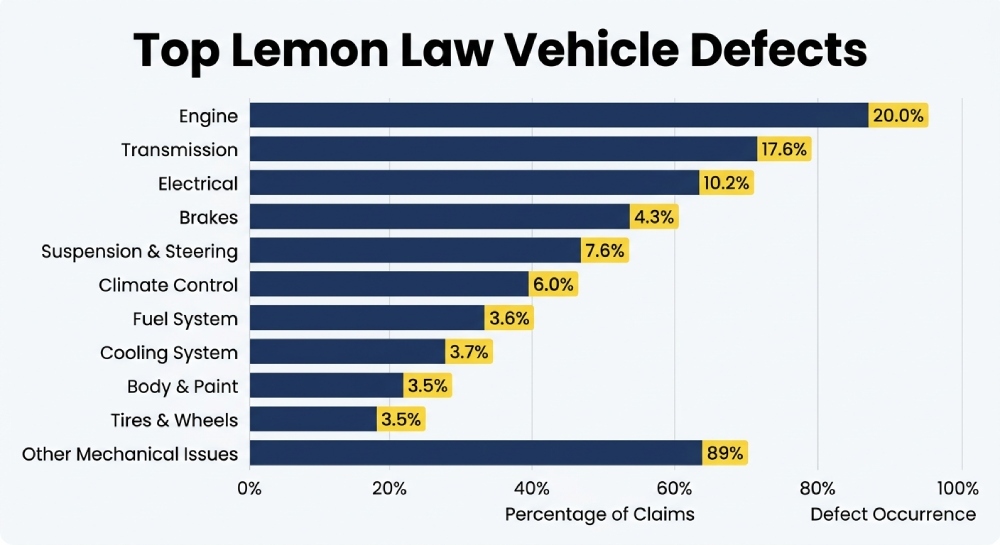
Engine stalling, overheating, or loss of power.
Transmission slipping or shifting unexpectedly.
Electrical malfunctions or dashboard warning lights.
Brake problems or steering difficulties.
Infotainment system failures or recurring software glitches.
Detailed descriptions help establish the nature of the defect and explain how it affects the vehicle's operation, safety, value, or reliability. If the same symptoms appear across multiple repair orders, those records may help demonstrate that the issue is persistent rather than an isolated incident.
2. The Number of Repair Attempts
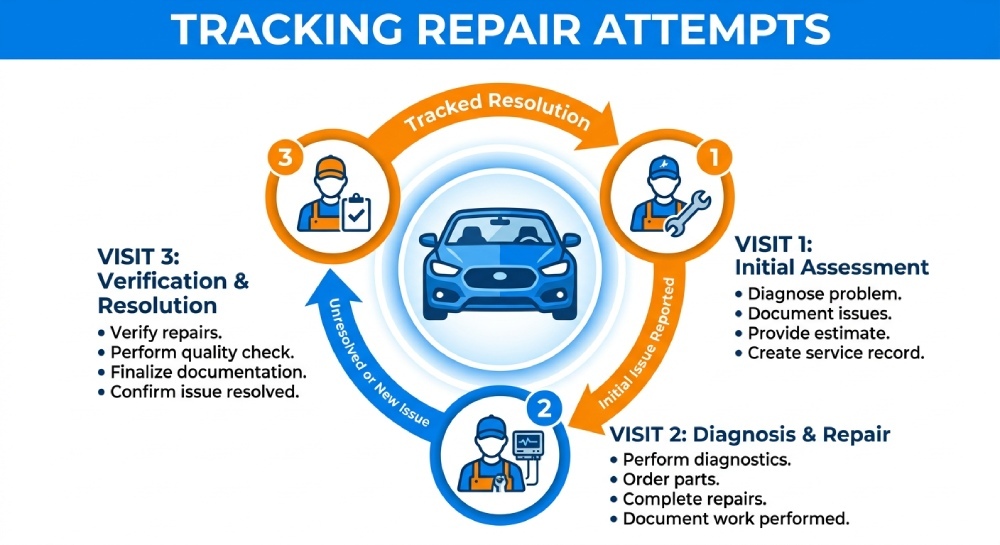
Repair orders can help establish how many times a manufacturer or dealership attempted to address the same problem. This information may be particularly important when evaluating whether a vehicle defect has resisted reasonable repair efforts.
For example, a vehicle might return to the dealership three times because of an engine warning light. Each visit may result in a different diagnostic test, software update, or component replacement, yet the warning light continues to appear.
A review of these records can help answer important questions:
How many repair visits involved the same defect?
Did the dealership attempt different solutions?
Did the problem return after each repair?
Was the vehicle eventually repaired successfully?
The number of attempts alone does not automatically determine the outcome of a lemon law claim. However, a documented history of unsuccessful repairs may provide important evidence when assessing the case.
3. Whether the Problem Was Properly Documented
The way a defect is described in a repair order can influence how clearly the repair history communicates the problem. Vague descriptions may make it harder to connect separate visits to the same underlying issue.
For example, a repair order stating "customer reports engine noise" provides less detail than one documenting when the noise occurs, how frequently it happens, and whether it affects engine performance.
Owners should review their records to determine whether the reported symptoms are accurately reflected. If a significant problem was described incorrectly or incompletely, ask the dealership whether the record can be corrected or supplemented appropriately.
Accurate documentation helps create a clearer timeline and reduces confusion when someone reviews the vehicle's repair history.
4. The Repairs and Diagnostic Tests Performed
A repair order typically identifies the work performed during a service visit. This may include diagnostic testing, replacement parts, software updates, adjustments, or recommendations for further inspection.
These details can reveal whether the dealership investigated the underlying cause of a defect or addressed only its visible symptoms.
For instance, repeatedly resetting a warning light may temporarily eliminate the dashboard alert without resolving the mechanical problem that triggered it. If the same warning returns, subsequent repair orders may help show that earlier efforts did not provide a lasting solution.
Compare the work performed during each visit to identify whether the repair strategy changed over time and whether the documented results indicate that the defect was resolved.
5. The Length of Time Your Vehicle Spent in the Shop
Repair orders often include dates when a vehicle was received and returned. These dates can help establish how long the vehicle was unavailable for normal use because of repairs.
Extended repair periods may occur when a dealership needs additional diagnostic testing, waits for replacement parts, or attempts multiple repairs.
To evaluate the effect on your case, review the records for:
Vehicle drop-off and pickup dates.
Periods when the vehicle remained at the dealership.
Delays caused by parts availability or further testing.
Multiple visits related to the same unresolved defect.
Keep in mind that the total number of days out of service may need to be calculated carefully. Overlapping dates, separate visits, and the reason for each service period can affect the final assessment.
6. Whether the Defect Affected Vehicle Safety
Some repair orders contain details suggesting that a vehicle defect created a potential safety concern. These records may be particularly significant when the problem affects essential vehicle functions.
Examples include unexpected loss of power while driving, brake malfunctions, steering difficulties, engine shutdowns, or recurring failures involving safety systems.
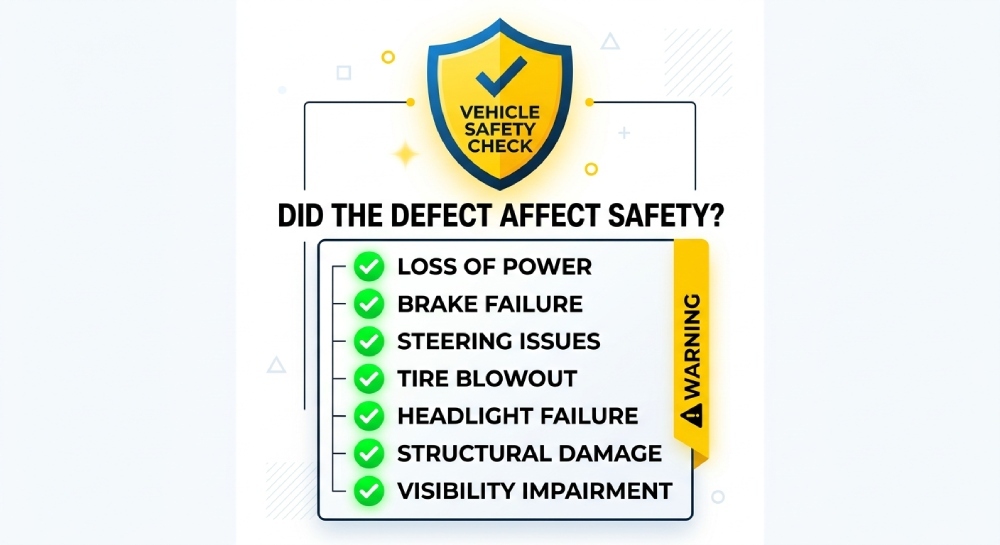
The repair order may document warning indicators, technician observations, diagnostic findings, or recommended repairs. Such information can help explain the seriousness of the defect and its practical consequences.
If you reported a safety-related issue, check whether the repair order accurately reflects what happened. Describe the symptoms clearly when communicating with the service department, and retain copies of relevant diagnostic reports and repair recommendations.
A documented safety concern does not automatically establish eligibility for relief, but it may be an important part of the overall evidence.
7. Whether the Same Defect Continued After a Repair
A repair order may indicate that a technician completed a repair, but that does not necessarily mean the underlying problem was permanently resolved.
The most useful evidence often comes from comparing the dealership's recorded actions with what happened after the vehicle was returned.
Suppose a dealership replaces a sensor and records the repair as completed. A few weeks later, the same warning light appears, and the vehicle returns for another inspection. The two repair orders may help establish a connection between the original complaint and the recurring symptoms.
Look for repeated diagnostic codes, similar owner complaints, recurring warning messages, and repairs that failed to produce lasting results.
Maintaining a personal record of when symptoms return can also help connect the repair history with your actual driving experience.
8. What the Dealership and Technician Acknowledged
Repair orders may contain technician notes, diagnostic findings, and recommendations that provide additional context about the defect.
For example, a technician might document an abnormal reading, identify a malfunctioning component, recommend further testing, or note that a problem could not be reproduced during the inspection.
These details can help clarify what the dealership knew at the time of each visit and how it responded to the reported problem.
However, a statement that a defect could not be reproduced does not necessarily mean the owner's complaint was inaccurate. Some intermittent problems occur only under particular driving conditions or after the vehicle has been operating for a certain period.
Review the technician's findings alongside your own description of the symptoms, earlier repair orders, and any available photographs, videos, or diagnostic records.
9. Gaps or Inconsistencies in Your Repair History
Missing information and inconsistencies can make it more difficult to understand the full history of a vehicle defect. A repair order might omit a reported symptom, list an incorrect mileage reading, or describe a complaint differently from previous visits.
These discrepancies do not automatically invalidate a potential claim, but they may create questions that need clarification.
Check your documents for:
Missing repair orders from previous dealership visits.
Incorrect dates, mileage readings, or vehicle details.
Incomplete descriptions of reported problems.
Differences between the work performed and the work recommended.
Missing invoices, diagnostic reports, or parts-replacement records.
Request copies of available service records and keep them organized by date. If you notice an error, contact the dealership to ask whether it can be corrected or explained. Preserve the original documentation and avoid altering records yourself.
How to Organize Your Repair Orders for a Lemon Law Case
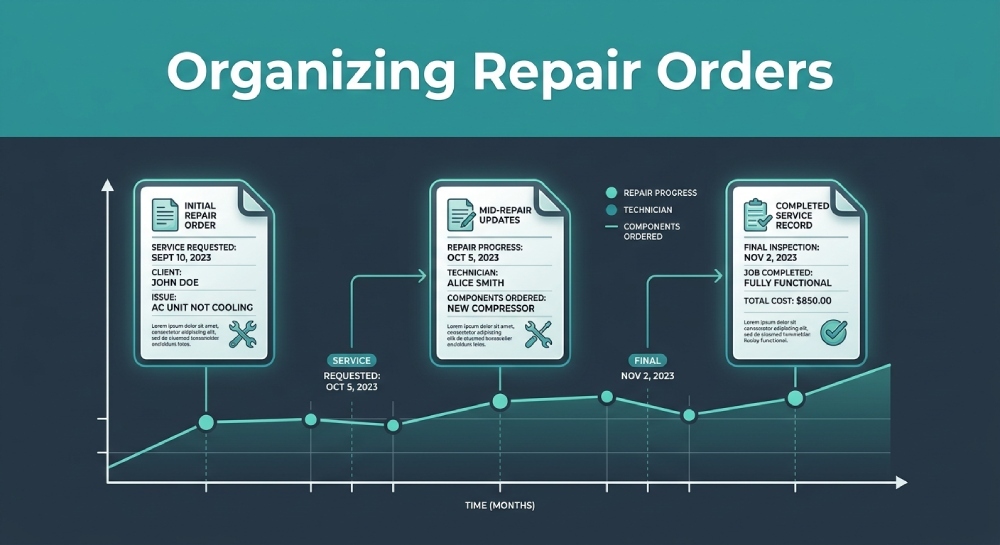
Once you have collected your repair orders, arrange them chronologically and compare the information across visits. A simple timeline can help show when a defect first appeared, what repair attempts followed, and whether the problem continued.
Include supporting documents such as warranty information, service invoices, diagnostic reports, written communications with the dealership, and notes about symptoms experienced between visits.
If the records show repeated repair attempts, extended periods without the vehicle, or unresolved safety concerns, consider having a qualified lemon law attorney review the documentation. An attorney can help evaluate the evidence, explain applicable eligibility requirements, and identify whether additional records may strengthen your position.
Final Thoughts
Repair orders can provide valuable evidence when evaluating a potential lemon law case. They may reveal recurring defects, unsuccessful repair attempts, extended service periods, safety concerns, and inconsistencies that require further investigation.
The key is to look beyond individual service visits and examine the complete repair history. Keeping accurate records, requesting missing documentation, and organizing supporting evidence can help you better understand your vehicle's problems and prepare for a more informed discussion about your legal options.
- lemon law
- repair orders
- vehicle repair history
- lemon law case
- repair attempts
- vehicle defects
- warranty claims
- vehicle safety issues
- dealership repair records
- automotive defects
Think you've got a lemon?
Compare your situation to your state's requirements — and connect with a vetted lemon-law attorney for a free case review.