9 Things Your Dealership May Not Tell You About a Repeat Vehicle Defect
When the same vehicle defect keeps returning after multiple dealership visits, the repair history can become important when evaluating potential Lemon Law rights. Keeping detailed repair orders, documenting recurring symptoms, tracking repair attempts and vehicle downtime, and saving warranty and communication records can help establish the history of the problem. A repeat defect does not automatically qualify as a Lemon Law claim, but a Lemon Law attorney can review the circumstances and explain whether potential legal remedies may apply.
By Vishal

When the same vehicle defect keeps returning after multiple trips to the dealership, it can be frustrating and expensive. You may be told that the problem has been fixed, that technicians cannot reproduce the issue, or that the vehicle simply needs another repair attempt.
What a dealership may not explain is that a repeated defect can create an important repair history. Depending on the circumstances, that history may also become relevant to your rights under applicable Lemon Law protections.
Understanding what to document and what repeated repair attempts may mean can help you make informed decisions about your vehicle and potential Lemon Law claim.
1. The Same Problem Coming Back Matters
A vehicle does not necessarily become problem-free simply because a dealership performed a repair. If the same symptom continues or returns, it may indicate that the underlying defect has not been properly corrected.
A recurring problem can be especially important when it affects the vehicle's safety, use, or value.
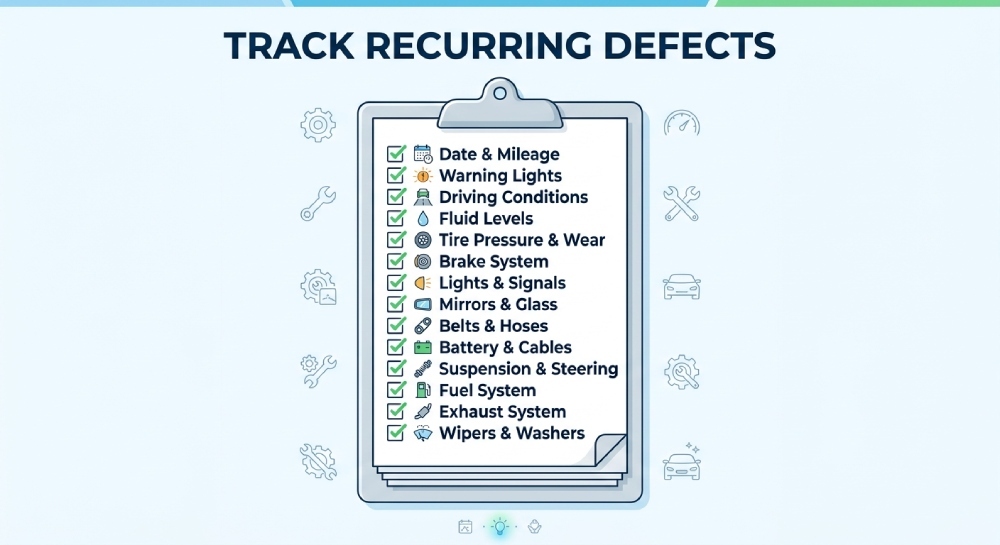
Keep Track of Recurring Symptoms
Each time the problem occurs, record:
The date and mileage
What happened
Warning lights or error messages
Driving conditions when the problem occurred
What you told the dealership
What repairs were performed
Whether the problem returned afterward
A consistent record can help establish that the defect was recurring rather than an isolated incident.
2. Your Repair Order Can Be Important Evidence
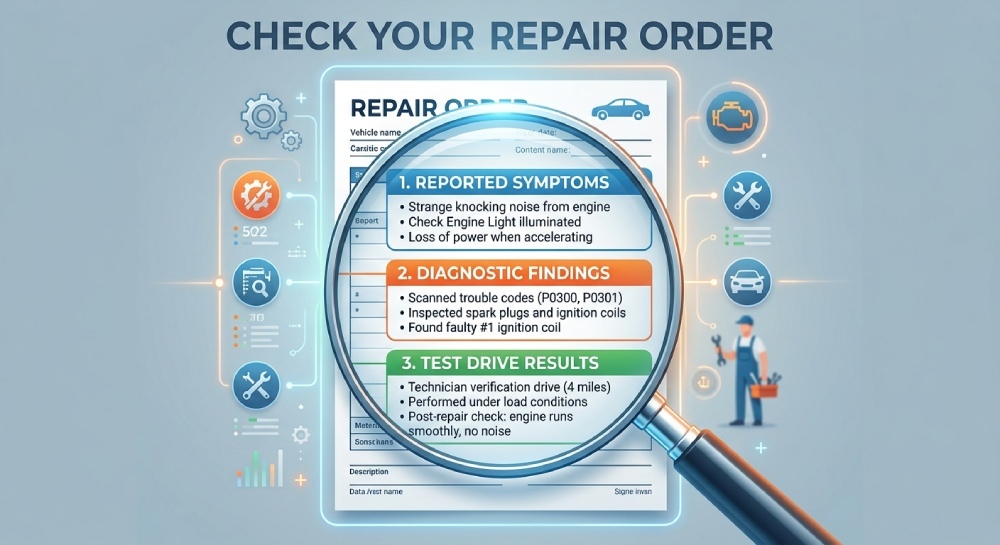
A repair order provides written documentation of why you brought the vehicle to the dealership and what was done during the visit.
Before leaving the dealership, review the repair documentation and make sure it accurately reflects the problem you reported.
For example, if your vehicle repeatedly loses power but the only says "customer states vehicle feels unusual," important details about the defect may not be documented.
Check Your Repair Documentation
Look for:
The symptoms you reported
Diagnostic findings
Parts replaced
Software updates or adjustments
Test-drive results
Statements that the problem could not be duplicated
The date and mileage
Whether the technician considered the repair complete
Keep copies of every repair order, even when the dealership says that no problem was found.
3. "Cannot Duplicate the Problem" Does Not Erase Your Complaint
Intermittent vehicle defects can be difficult for technicians to reproduce. Electrical problems, warning lights, transmission issues, starting problems, and unusual noises may disappear temporarily before returning later.
If the dealership cannot reproduce the issue during one visit, that does not change the fact that you experienced the problem.
Document the Problem When It Happens
When appropriate, consider documenting:
Dashboard warning messages
Unusual noises
Visible symptoms
Video of the problem occurring
When and where the problem happened
Continue reporting the issue to the dealership and make sure your complaint is included in the repair documentation.
4. Multiple Repair Attempts May Become Relevant to a Lemon Law Claim
Repeated attempts to repair the same warranty-covered defect can become important when evaluating a potential Lemon Law claim.
However, there is no universal rule that says every vehicle automatically qualifies as a lemon after a specific number of repair visits. Requirements can vary depending on the applicable law and the facts of the case.
Your Repair History Can Help Show:
How many times the vehicle was presented for repair
Whether the same defect continued
Whether different repairs were attempted
Whether the problem returned after a repair
How seriously the defect affected the vehicle
How long the vehicle remained unavailable
A Lemon Law attorney can review this history and explain whether the repair attempts may support a potential claim.
5. The Manufacturer May Have Responsibilities Too
Consumers sometimes assume that the dealership alone is responsible for resolving a recurring vehicle defect. However, warranty and Lemon Law claims can involve the vehicle manufacturer as well.
The dealership may diagnose and repair the vehicle, while the manufacturer may have obligations under the applicable warranty and Lemon Law.
Why This Distinction Matters
If repeated repairs have not fixed a qualifying warranty problem, the question may extend beyond whether the dealership can attempt another repair.
Depending on the applicable law and circumstances, potential remedies can include:
Vehicle repurchase
Vehicle replacement
Reimbursement of certain expenses
Other legally available compensation
A Lemon Law lawyer can review the warranty, repair history, and other documents to determine what remedies may potentially apply.
6. A Software Update Does Not Necessarily Mean the Defect Is Fixed
Today's vehicles depend on sophisticated software and electronic systems. A dealership may install an update, reprogram a module, reset a system, or make another software-related adjustment.
But the important question is whether the recurring problem was actually resolved.
If the same symptom returns after a software update, report it again and keep documentation of the new occurrence.
Find Out What Was Done
Review your repair paperwork to determine whether the dealership:
Installed a software update
Reprogrammed a control module
Replaced a component
Performed diagnostic testing
Made a mechanical adjustment
Determined that no repair was necessary
A detailed record can help a Lemon Law attorney understand what repair attempts were made and whether the defect remained unresolved.
7. You May Not Have to Treat Every Failed Repair as a Fresh Start
When a vehicle returns to the dealership with the same problem, it can be tempting to view each repair visit as a completely separate event.
However, the complete repair history may provide a better picture of the recurring defect.
A Lemon Law evaluation can involve looking at the vehicle's overall history rather than focusing on only the most recent repair order.
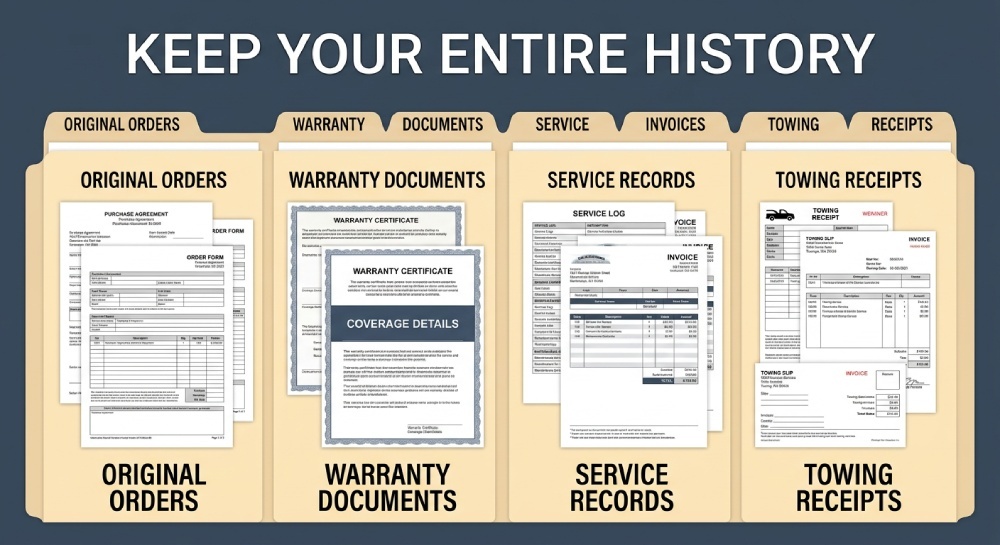
Keep the Entire History Together
Do not discard older repair orders simply because the dealership later performed another repair.
Keep:
Original repair orders
Follow-up repair orders
Warranty documents
Purchase or lease paperwork
Service records
Communications with the manufacturer
Rental-car records
Documentation of recurring symptoms
The more complete the record, the easier it may be for an attorney to evaluate the situation.
8. Time Without Your Vehicle Can Also Matter
Consumers often focus on the number of repair visits and overlook how much time their vehicle has spent at the dealership.
Repeated periods without access to the vehicle can be significant when evaluating the overall impact of a defect.
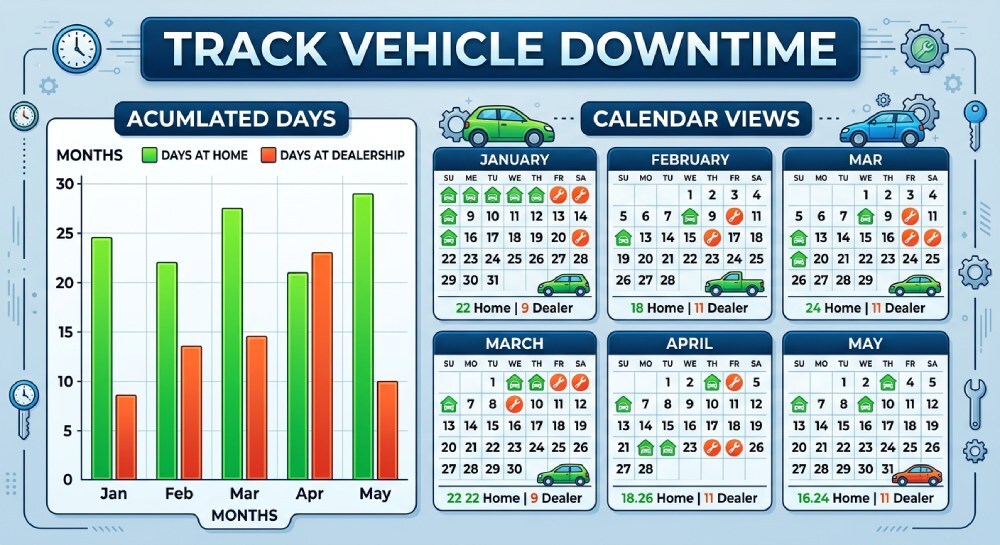
Track Your Vehicle's Downtime
Record:
When you dropped the vehicle off
When you received it back
How long parts were delayed
How long diagnosis took
Whether additional repairs were required
Whether you needed a rental or alternative transportation
This information can help establish the practical impact of the recurring defect and provide useful documentation for a Lemon Law attorney.
9. Another Repair Attempt May Not Be the Only Question
If the same significant defect continues despite repeated repair attempts, you may want to understand your legal options instead of simply assuming that another repair is your only choice.
Depending on the applicable Lemon Law and the circumstances of the vehicle, a consumer may have potential rights or remedies when a manufacturer cannot successfully repair a qualifying warranty defect.
When Should You Speak With a Lemon Law Lawyer?
Consider discussing your situation with a Lemon Law attorney if:
The same defect keeps returning
Multiple repair attempts have failed
The vehicle has significant safety problems
The vehicle has spent substantial time in the shop
The dealership repeatedly says it cannot reproduce the problem
You are concerned that your warranty rights are being overlooked
The manufacturer has denied or delayed your request for a remedy
An attorney can review your repair orders, warranty documents, purchase or lease paperwork, and communications to determine whether your circumstances may support a Lemon Law claim.
What to Do When the Same Vehicle Defect Keeps Returning
If your vehicle continues experiencing the same warranty-related problem, take practical steps to protect your records and understand your options.
Report the defect clearly every time.
Make sure the complaint appears on the repair order.
Keep copies of every repair document.
Track mileage and repair dates.
Document recurring symptoms when possible.
Record how long the vehicle remains at the dealership.
Keep communications with the dealership and manufacturer.
Save your purchase, lease, and warranty documents.
Consider consulting a Lemon Law attorney if the defect remains unresolved.
Final Thoughts
A recurring vehicle defect can be more than an inconvenience. Repeated repair visits can create a detailed history showing what went wrong, how often the vehicle required attention, and whether previous repair attempts actually resolved the problem.
A repeat defect does not automatically mean that a vehicle qualifies as a lemon. Lemon Law requirements vary, and eligibility depends on the specific facts, warranty coverage, repair history, and applicable law.
If your vehicle has repeatedly returned to the dealership for the same significant defect, organizing your records and speaking with a qualified Lemon Law lawyer can help you understand whether you may have a potential claim and what options may be available.
- repeat vehicle defect
- recurring vehicle problems
- dealership repair
- vehicle repair history
- failed repair attempts
- Lemon Law
- Lemon Law lawyer
- vehicle warranty
- defective vehicle
- warranty repair
- dealership repair records
- vehicle downtime
- consumer rights
- Lemon Law claim
Think you've got a lemon?
Compare your situation to your state's requirements — and connect with a vetted lemon-law attorney for a free case review.