9 Red Flags Lemon Law Lawyers Notice in Vehicle Repair Records
Vehicle repair records can reveal important patterns in recurring vehicle problems, including repeated complaints, unsuccessful repairs, diagnostic attempts, and extended time at a repair facility. This article highlights nine red flags lawyers may examine when reviewing repair records and explains why complete, organized documentation can help evaluate a potential lemon law or warranty claim.
By Vishal
Vehicle repair records can tell a much bigger story than a simple list of parts replaced and services performed. When a vehicle has ongoing problems, these records may help show how often the vehicle was presented for repairs, what concerns were reported, what technicians attempted to fix, and whether the same problem continued.
Lemon law lawyers often examine repair orders, invoices, technician notes, diagnostic reports, warranty claims, and related communications when reviewing a potential claim. Keeping detailed records is also important because the FTC recommends maintaining warranty, repair, and maintenance documentation.
Here are nine red flags that may receive particular attention during a repair-record review.
1. The Same Problem Appears on Multiple Repair Orders
One of the clearest patterns is the repeated appearance of the same complaint.
For example, a repair history might show:
Engine hesitation reported on one visit
Engine hesitation diagnosed again several weeks later
Software updated during another visit
Warning light returning after the repair
Customer reporting the same symptom again
Repeated entries can help establish that an issue did not disappear after an earlier repair attempt.
A repair order does not necessarily prove that a vehicle qualifies under lemon law. However, a history showing repeated complaints and repair attempts can provide important information for evaluating the situation.
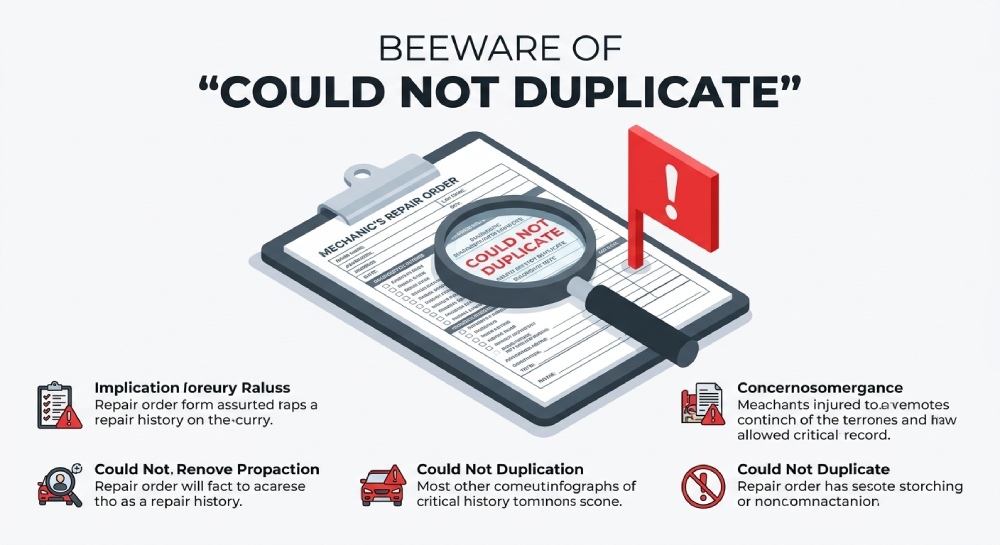
2. The Repair Order Says “Could Not Duplicate”
A vehicle problem does not always occur while it is sitting at a repair facility. Intermittent problems involving electronics, sensors, warning lights, starting systems, transmission behavior, or other components can be difficult to reproduce.
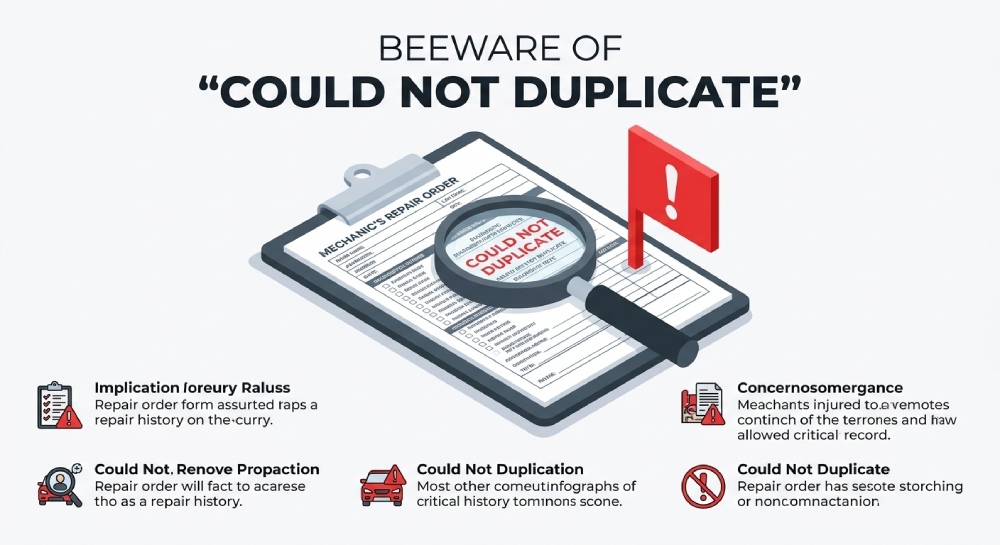
A record stating “could not duplicate” or similar language may be significant when the owner has repeatedly reported the same symptom.
A lawyer may compare those entries with later repair orders to determine whether the problem eventually became reproducible or resulted in a confirmed diagnosis.
The key issue is not simply the phrase itself. The entire repair history matters.
3. A Repair Is Listed as Completed, but the Complaint Returns
Another potential red flag is a pattern in which a repair is marked completed, but the customer returns with substantially the same concern.
For example:
The customer reports a transmission problem.
A component is inspected or replaced.
The repair order states that the vehicle was repaired.
The customer later reports the same transmission symptom.
Another diagnostic or repair procedure is performed.
This type of sequence may show that an earlier repair did not permanently resolve the reported problem.
4. Multiple Parts Are Replaced Without Resolving the Issue
Repair records sometimes show a series of component replacements without a lasting solution.
A technician might replace one sensor, then another component, followed by wiring, a control module, or another related part. If the same symptom continues throughout these visits, the repair history may raise questions about whether the underlying defect was correctly diagnosed.
The FTC advises consumers to obtain completed repair orders describing repairs, parts, costs, labor, and vehicle mileage.
For a legal review, those details can help establish a timeline and distinguish between separate maintenance items and repeated attempts to address a continuing defect.
5. The Vehicle Spends Significant Time at the Repair Facility
Time out of service can be another important part of a vehicle's repair history.
A lawyer may review:
Date the vehicle was dropped off
Date diagnosis began
Date repairs were performed
Date parts were ordered
Date the vehicle became available
Date the customer actually picked it up
A manufacturer's warranty manual published through NHTSA, for example, emphasizes accurate documentation of repair start and completion dates because time out of service can be relevant to lemon law analysis.
The exact legal significance of repair time depends on the applicable law and the facts of the case.
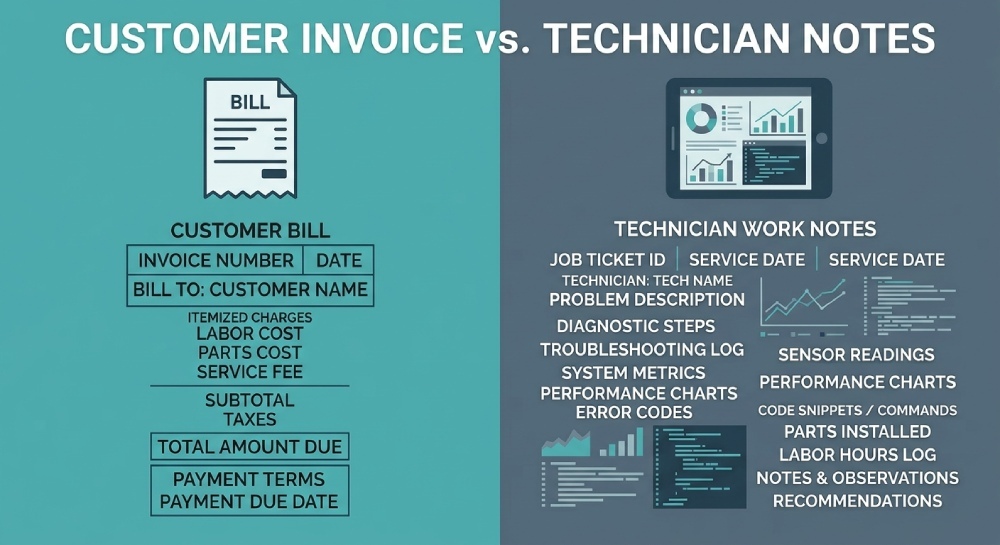
6. Technician Notes Conflict With the Customer-Facing Repair Order
The customer-facing portion of a repair order may be brief, while technician notes can contain more detailed diagnostic information.
For example, a final invoice might simply state that a vehicle was inspected, while internal notes could document:
Specific diagnostic trouble codes
Failed tests
Unusual noises or symptoms
Diagnostic procedures performed
Parts that were tested or replaced
Recommendations for additional repairs
Differences between these records can become important when reconstructing what actually happened during a repair visit.
This is one reason consumers should retain complete copies of repair documentation whenever possible.
7. The Repair Records Show Repeated Diagnostic Attempts
Repeated diagnostics can be significant even when no major component is replaced.
A vehicle may return several times for the same warning light or drivability concern while technicians perform scans, inspections, software checks, road tests, or other diagnostic procedures.
The absence of a replaced part does not necessarily mean nothing happened during the visit. The record may show that the manufacturer or repair facility had another opportunity to investigate the reported defect.
A 2015 FTC audit of an automobile warranty arbitration program illustrates why the complete repair history can matter: the audit discussed a case involving multiple unsuccessful attempts before a later technical investigation identified a transmission computer issue.
8. The Records Contain Vague Descriptions of the Customer's Complaint
A repair record is more useful when it accurately describes what the driver experienced.
Compare:
Vague:
“Check vehicle.”
More specific:
“Customer reports vehicle hesitates during acceleration and warning light appears intermittently.”
Specific descriptions can make it easier to connect multiple repair visits involving the same symptom.
Consumers should describe problems as clearly as possible when bringing a vehicle in for service. Keeping personal notes about dates, symptoms, warning lights, driving conditions, and conversations with service personnel can also help preserve the history.
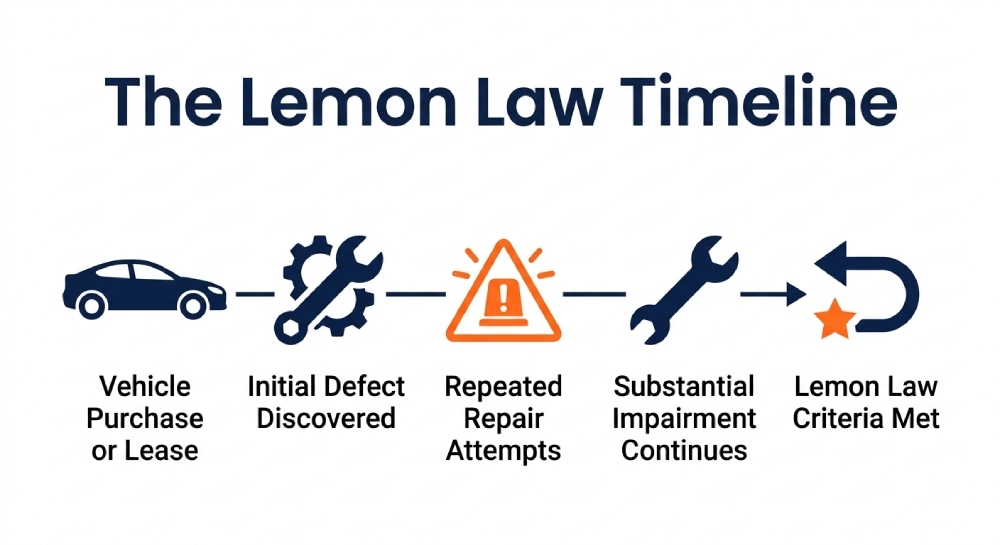
9. The Same Defect Continues After Several Repair Attempts
Perhaps the most important pattern is continued malfunction after repeated efforts to address the issue.
A repair history may reveal a progression such as:
Initial complaint
First attempted repair
Return with the same problem
Additional diagnostic testing
Second attempted repair
Problem continues
Further repair visit
This chronology can help a lawyer evaluate whether the circumstances satisfy the requirements of an applicable lemon law or warranty claim.
Importantly, there is no universal number of repair attempts that automatically makes every vehicle a lemon. Legal standards can differ depending on the governing law, warranty terms, vehicle circumstances, and nature of the defect.
Why Complete Repair Records Matter
Repair records should be viewed as more than receipts. Together, they can create a timeline showing what happened to a vehicle from the first reported problem through subsequent diagnostic and repair attempts.
Useful documents may include:
Repair orders and invoices
Warranty claim records
Technician notes
Diagnostic reports
Parts replacement records
Vehicle mileage records
Service appointment confirmations
Communications about repair problems
Maintenance receipts
The FTC specifically recommends keeping warranty and repair records because they can help document warranty service and vehicle maintenance.
What Should Vehicle Owners Do With Their Repair Records?
If a vehicle continues experiencing serious problems, avoid throwing away old repair documents simply because the vehicle was eventually returned to you.
Instead, organize the records chronologically and keep copies of documents from every relevant visit. Note when each problem started, when the vehicle entered the repair facility, what was diagnosed, what work was performed, and whether the issue returned.
A lawyer can then review the documentation and determine whether the repair history supports a potential lemon law or warranty claim.
Final Thoughts
Vehicle repair records can reveal patterns that are difficult to recognize from individual visits. Repeated complaints, unresolved symptoms, multiple diagnostic attempts, lengthy repair periods, conflicting notes, and recurring defects may all deserve closer examination.
No single entry automatically establishes a lemon law claim. The significance of each red flag depends on the complete repair history and the legal requirements that apply. Still, maintaining detailed records gives a lawyer a stronger factual foundation for evaluating what happened and determining what options may be available.
- lemon law
- lemon law lawyers
- vehicle repair records
- repair history
- vehicle defects
- warranty claims
- repair attempts
- defective vehicles
- automotive repairs
- lemon law claim
- vehicle warranty
- repair documentation
Think you've got a lemon?
Compare your situation to your state's requirements — and connect with a vetted lemon-law attorney for a free case review.