7 Situations Where A Vehicle's Repair History Matters More Than Its Mileage
A vehicle's mileage does not always reflect its actual condition. Repeated mechanical failures, major repairs, safety issues, electrical problems, and unresolved defects can reveal more about a vehicle's reliability than its odometer reading. Reviewing repair records helps buyers identify potential concerns, assess vehicle condition, and make more informed purchasing decisions.
By Vishal
When evaluating a vehicle's condition, mileage is often one of the first things buyers consider. A car with fewer miles may appear to be a better investment than one with significantly higher mileage. However, the odometer does not tell the complete story. A vehicle's maintenance and repair history can reveal important details about its reliability, mechanical condition, safety, and potential for future problems.
A low-mileage vehicle may have experienced repeated mechanical failures, unresolved defects, or major repairs. Meanwhile, a higher-mileage vehicle with consistent maintenance and properly documented repairs may be in better overall condition.
Understanding a vehicle's repair history is especially important when determining whether recurring problems indicate a deeper issue. Here are seven situations where repair records can matter more than mileage.
1. When a Vehicle Has Repeated Mechanical Problems
Repeated mechanical failures can indicate that a vehicle has an underlying problem that has not been properly resolved. Even if the odometer shows relatively few miles, multiple repair visits for the same component deserve attention.
For example, a vehicle may repeatedly experience problems with its transmission, engine cooling system, fuel system, or electrical components.
Reviewing repair records can help identify:
How frequently the vehicle has required repairs.
Whether the same component has failed multiple times.
Whether previous repairs addressed the actual cause of the problem.
Whether the issue returned shortly after a repair was completed.
A vehicle with 20,000 miles and several documented transmission repairs may deserve more scrutiny than one with 70,000 miles and a consistent maintenance record.
The number of miles driven matters, but repeated mechanical problems can provide a clearer picture of the vehicle's reliability.
2. When Major Components Have Been Replaced or Repaired
Major component repairs can significantly affect a vehicle's overall condition. Engine, transmission, suspension, and drivetrain repairs are particularly important because these systems play essential roles in vehicle performance and operation.
However, a major repair does not automatically mean a vehicle is unreliable. A properly completed replacement or repair may restore functionality and address an existing problem.
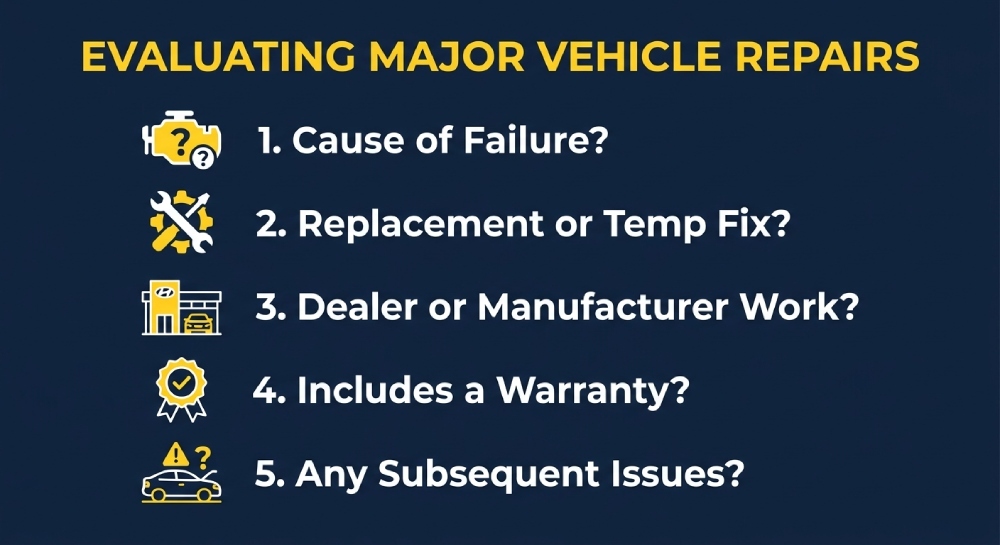
Buyers should examine the details behind major repairs, including:
What caused the original component to fail.
Whether the repair involved replacement or temporary restoration.
Whether the manufacturer or dealership completed the work.
Whether the replacement component came with a warranty.
Whether additional problems appeared after the repair.
For example, a vehicle with 45,000 miles may have already undergone an engine replacement. Another vehicle with 85,000 miles may still have its original engine and a consistent service history.
Neither mileage figure tells the complete story. The quality, reason, and documentation of the repair are equally important.
3. When Safety-Related Components Require Repeated Repairs
Safety-related repairs deserve particular attention because they can affect a vehicle's ability to operate safely. Problems involving braking systems, steering components, airbags, seat belts, and suspension systems should never be evaluated based on mileage alone.
A vehicle with relatively low mileage may still have serious safety concerns if these components have experienced repeated failures.
Important repair records to review include:
Brake system inspections and repairs.
Steering system component replacements.
Airbag warning light investigations.
Suspension and structural repairs.
Seat belt and restraint system corrections.
It is also important to determine whether the vehicle has received any applicable safety recalls and whether the required recall repairs were completed.
A low odometer reading does not guarantee that a vehicle is safe. Its repair history can reveal problems that might otherwise go unnoticed during a routine inspection.
4. When Electrical and Electronic Problems Keep Returning
Modern vehicles depend on complex electrical and electronic systems. Sensors, control modules, cameras, infotainment systems, and driver-assistance technologies all contribute to everyday vehicle operation.
Although some electrical problems may appear minor, recurring faults can become frustrating and expensive to diagnose.
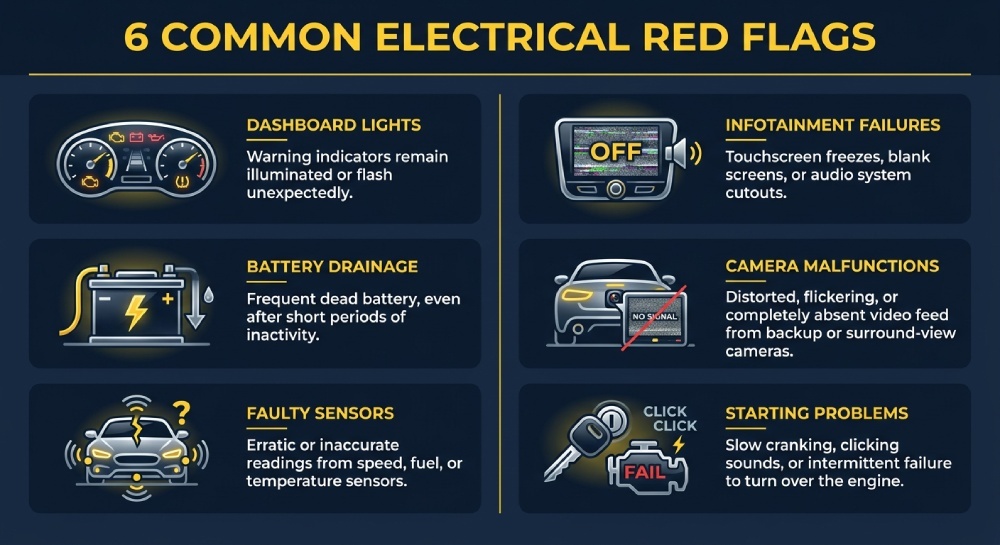
For example, a vehicle may repeatedly experience:
Dashboard warning lights.
Battery drainage or charging problems.
Faulty sensors and electronic modules.
Infotainment system failures.
Backup camera or parking assistance malfunctions.
Intermittent starting problems.
Repair records can help establish whether these issues were isolated incidents or part of a continuing pattern.
A vehicle with 25,000 miles that has required several visits for electrical problems may present more concerns than a vehicle with 90,000 miles and no comparable repair history.
Repeated diagnostic visits are particularly important because a dealership may have investigated a problem without successfully correcting its underlying cause.
5. When the Vehicle Has Spent Significant Time in the Repair Shop
Mileage measures how far a vehicle has traveled, but it does not measure how long the vehicle has been unavailable because of mechanical problems.
A vehicle may have relatively low mileage because its owner has spent considerable time taking it to repair facilities instead of driving it.
Extended repair visits can affect the overall ownership experience, especially when problems involve essential systems.
When reviewing repair history, consider:
- The number of separate repair visits.
- The dates when the vehicle entered and left the repair facility.
- The reason for each visit.
- Whether the vehicle was returned with the same unresolved problem.
- Whether replacement parts or additional diagnostic work caused delays.
A vehicle with 30,000 miles and multiple extended repair visits may have a more concerning ownership history than a vehicle with twice the mileage and routine maintenance records.
Time spent out of service is an important factor when evaluating vehicle reliability. It can also be relevant when determining whether a vehicle has experienced repeated warranty-related problems.
6. When the Vehicle Has a History of Overheating or Fluid Leaks
Overheating and fluid leaks can indicate problems that deserve closer investigation, regardless of the vehicle's mileage.
Engine overheating may result from cooling system failures, damaged hoses, radiator problems, thermostat malfunctions, or water pump issues. Similarly, recurring oil, coolant, or transmission fluid leaks can point to component wear or installation problems.
These issues should not be dismissed simply because a vehicle has a relatively low odometer reading.
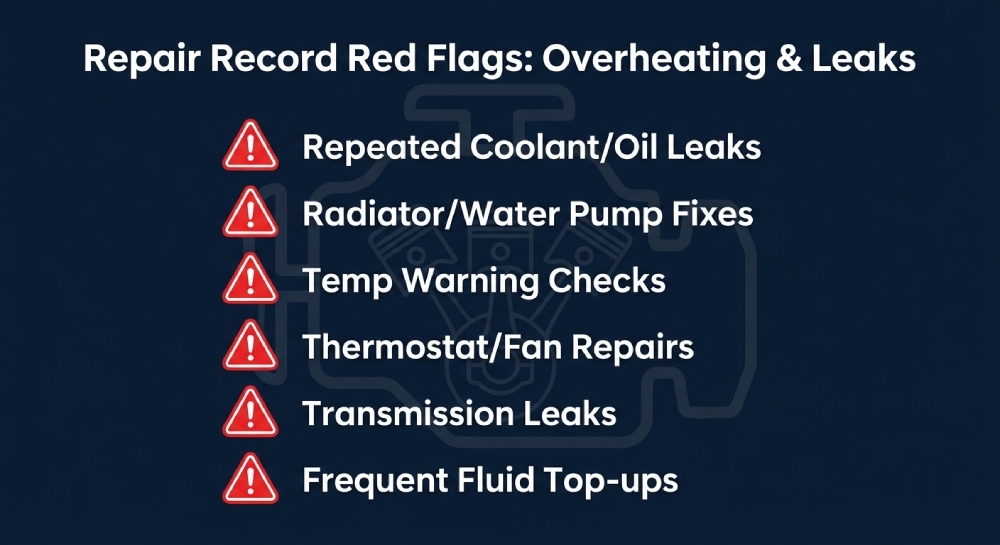
Review the repair records for:
- Repeated coolant or oil leak complaints.
- Radiator and water pump replacements.
- Engine temperature warning investigations.
- Cooling fan and thermostat repairs.
- Transmission fluid leaks.
- Repeated fluid top-ups or related maintenance.
An overheating incident can sometimes cause additional engine damage if it is not addressed promptly.
Likewise, a recurring leak may indicate that an earlier repair did not fully correct the problem.
The repair history helps establish whether the issue was properly resolved or whether the vehicle continued experiencing related symptoms.
7. When Repair Records Reveal an Unresolved Manufacturer Defect
One of the most important reasons to examine repair history is to identify potential manufacturing defects or recurring problems that affect a vehicle's normal operation.
Some defects may appear shortly after purchase, while others may develop over time. A vehicle can have low mileage and still experience repeated problems caused by defective parts, faulty designs, or software-related issues.
For example, owners may report recurring concerns involving:
- Transmission hesitation or shifting problems.
- Engine stalling or unexpected power loss.
- Defective fuel system components.
- Repeated steering or braking concerns.
- Malfunctioning safety sensors.
- Persistent software and electronic system failures.
Repair orders, diagnostic reports, warranty claims, and dealership communications can help establish when a problem first appeared and whether previous repair attempts addressed it.
If the same complaint continues after multiple repair visits, the vehicle's history may provide important evidence of a potentially unresolved defect.
In certain circumstances, repeated repair attempts or an extended period out of service may also become relevant when evaluating whether a vehicle qualifies for consumer protection under applicable warranty laws.
What to Review When Evaluating a Vehicle's Repair History
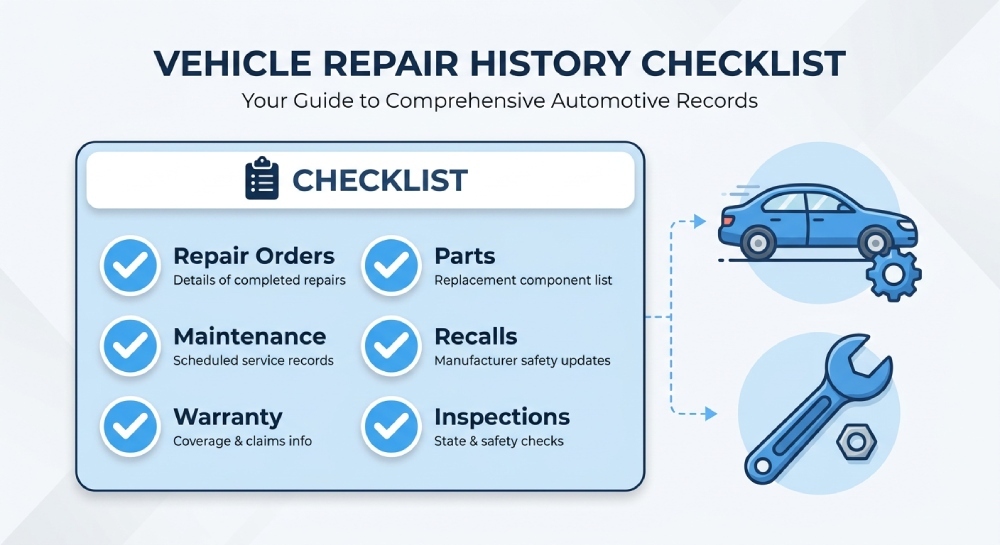
Mileage and repair history should be considered together rather than treated as competing measurements. Before purchasing or evaluating a vehicle, reviewing its available service documentation can help identify concerns that a basic odometer check might miss.
Consider collecting the following records:
Repair orders: Show reported symptoms, diagnostic findings, and completed work.
Maintenance records: Provide information about routine servicing and component inspections.
Warranty repair documentation: Helps identify problems addressed under the manufacturer's warranty.
Parts replacement records: Show which major components have been repaired or replaced.
Recall documentation: Indicates whether applicable safety recalls have been addressed.
Service visit dates: Help establish how frequently the vehicle required attention and how long repairs took.
It is also advisable to arrange an independent mechanical inspection whenever possible. A qualified technician can assess the vehicle’s current condition, identify potential problems that may not appear in its service records, and help buyers understand their legal protection before making a purchase decision.
Conclusion
A vehicle's mileage provides useful information, but it should never be the only factor used to evaluate its condition. Repeated mechanical failures, major component replacements, safety-related repairs, electrical problems, extended repair visits, fluid leaks, and unresolved manufacturer defects can all reveal concerns that the odometer cannot show.
For vehicle owners, keeping detailed repair records is equally important. Documentation can help establish recurring problems, support warranty discussions, and provide a clearer picture of the vehicle's repair history.
Ultimately, a vehicle with higher mileage and a consistent maintenance record may be a more dependable choice than a low-mileage vehicle with a history of repeated repairs. Looking beyond the odometer helps buyers and owners make more informed decisions about vehicle reliability, safety, and long-term value.
- vehicle repair history
- car mileage
- vehicle maintenance
- car repair records
- vehicle reliability
- used car inspection
- mechanical problems
- vehicle defects
- warranty repairs
- car maintenance history
- automotive safety
Think you've got a lemon?
Compare your situation to your state's requirements — and connect with a vetted lemon-law attorney for a free case review.