10 Documents to Keep When Building a Lemon Law Case
This article explains 10 important documents to keep when building a lemon law case, including purchase agreements, warranty records, repair orders, maintenance records, dealership and manufacturer communications, expense receipts, photos and videos, diagnostic reports, and a timeline of defects. Organized documentation can help vehicle owners demonstrate recurring problems, track repair attempts, and understand their potential legal options under applicable lemon laws.
By Vishal
When a vehicle develops recurring defects, repeated repair attempts can become frustrating, especially when the problems affect its safety, reliability, or everyday use. If the manufacturer or dealership cannot resolve the issue, the vehicle owner may consider pursuing a lemon law claim. Keeping organized records can help demonstrate what went wrong, when the problems occurred, and how the manufacturer or repair facility responded.
Although lemon law requirements vary by jurisdiction, documentation is often an important part of evaluating a potential claim. Repair histories, warranty information, purchase agreements, and communications can help establish a timeline of events and support the owner's account of the vehicle's problems.
Understanding which documents to preserve can make the process more manageable. Here are 10 important records to keep when building a lemon law case.
1. Vehicle Purchase or Lease Agreement
The purchase or lease agreement establishes the basic details of the vehicle transaction. It can help confirm when the vehicle was acquired, its purchase price, and the terms under which it was obtained.
What to Keep
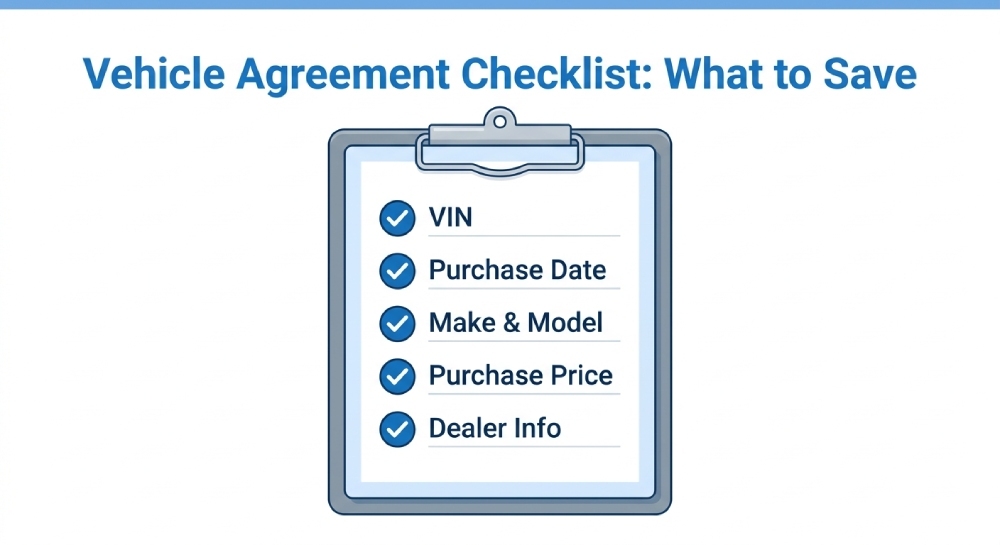
Save a complete copy of the signed agreement, including any attached documents. Important details may include:
Purchase date or lease commencement date
Vehicle make, model, and model year
Agreed purchase price or lease terms
Dealer information and applicable fees
This document can help establish ownership or lease status and provide information relevant to determining whether the vehicle falls within applicable lemon law protections.
2. Manufacturer's Warranty Documents
Warranty documents explain the manufacturer's obligations to repair certain defects during the applicable coverage period. They can help clarify which components are covered and what conditions apply to warranty service.
Why Warranty Records Matter
Keep the original warranty booklet, warranty statement, and any updates or extensions provided by the manufacturer. Pay particular attention to:
Warranty start and expiration dates
Covered components and systems
Exclusions and limitations
Extended warranty or service contract details
These records can help determine whether the reported defect occurred during the relevant coverage period and whether the manufacturer had an obligation to address it.
3. Repair Orders and Service Records
Repair orders are among the most important documents in a potential lemon law case. They provide a written record of the complaints reported to a dealership or repair facility and the work performed in response.
Information to Check on Every Repair Order
Whenever the vehicle enters a repair facility, request a copy of the completed paperwork. Make sure it includes:
The date the vehicle was brought in and returned
The owner's description of the problem
The technician's findings and diagnosis
Parts replaced, adjustments made, and repairs attempted
Whether the problem was resolved or remains unresolved
Keep records of every relevant visit, including visits where technicians could not reproduce the reported issue. Together, these documents can help establish how frequently the defect occurred and how many repair attempts were made.
4. Maintenance and Inspection Records
Routine maintenance records can help establish the vehicle's service history and provide context when a manufacturer questions how the vehicle was maintained.
Keep Maintenance Evidence Organized
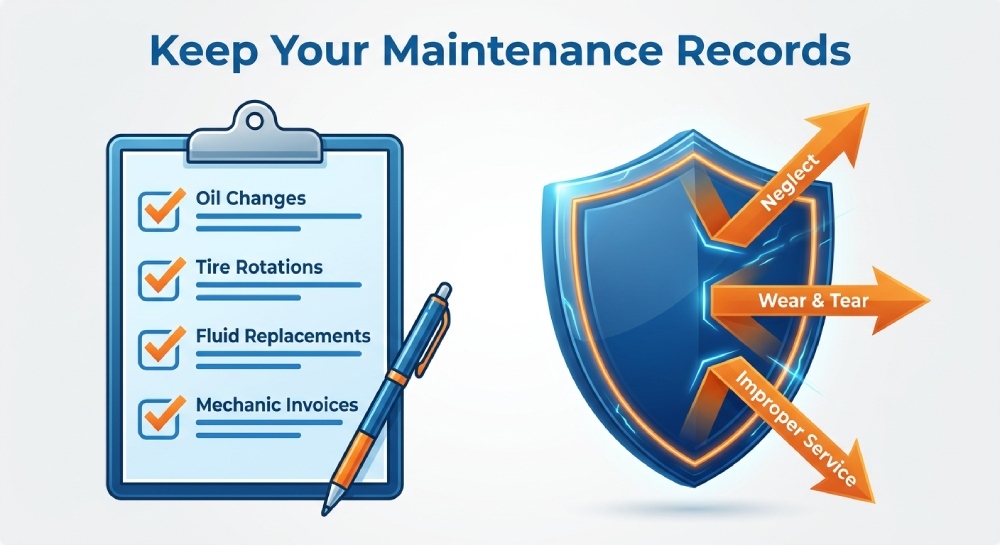
Preserve receipts and records for services such as oil changes, scheduled inspections, tire rotations, fluid replacements, and other recommended maintenance.
If maintenance was performed by an independent mechanic, retain the invoices and inspection notes. These records may help demonstrate that the vehicle received appropriate care and distinguish routine maintenance issues from recurring defects.
Accurate maintenance documentation can be particularly useful when the manufacturer argues that a problem resulted from neglect, improper servicing, or normal wear and tear.
5. Written Communications With the Dealership
Conversations with service advisors and dealership representatives may contain important details about a vehicle's recurring problems. However, verbal discussions can be difficult to reconstruct accurately months later.
Preserve Written Correspondence
Keep copies of relevant communications, including:
Emails with dealership staff
Text messages about repairs or recurring defects
Written explanations of diagnostic findings
Responses to complaints about unresolved problems
Promises concerning additional inspections or repairs
After an important phone conversation, consider sending a brief email summarizing what was discussed. This creates a dated record that may help clarify the parties' understanding of the issue.
6. Communications With the Manufacturer
Contacting the vehicle manufacturer directly may be an important step when dealership repairs fail to resolve a recurring defect. Manufacturer communications can document when the company learned about the problem and what response it provided.
Documents Worth Saving
Retain complaint reference numbers, emails, letters, case summaries, and written responses from customer assistance representatives.
If the manufacturer offers additional repairs, requests an inspection, or proposes another resolution, keep the related documentation. Record the dates of telephone calls and the names or identification details of representatives when available.
These records can help establish the manufacturer's involvement and show whether further assistance was requested or provided.
7. Receipts for Related Expenses
A defective vehicle may create expenses beyond the cost of repairs. Depending on the circumstances, an owner might pay for towing, rental transportation, alternative travel, or other costs associated with the vehicle's condition.
Which Receipts Should You Keep?
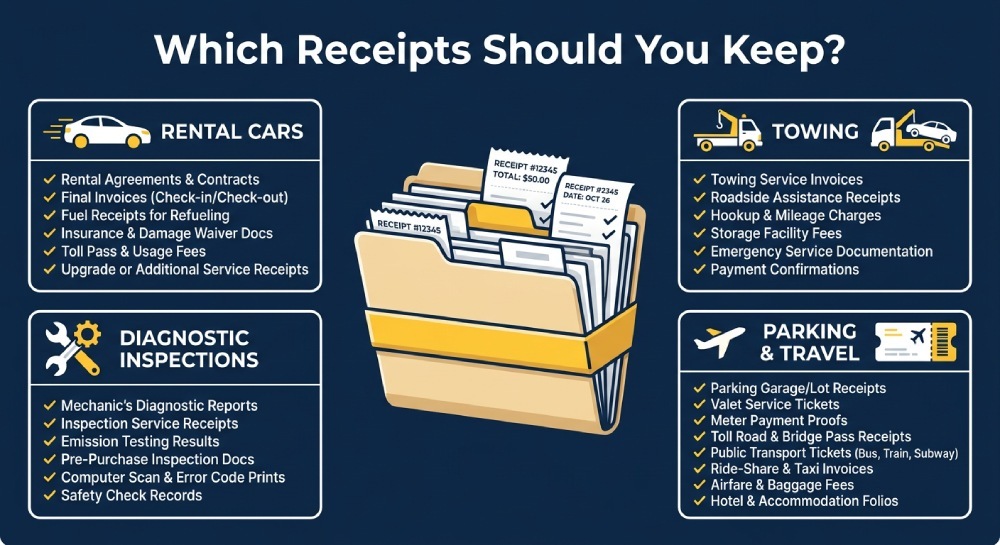
Organize receipts for potentially relevant expenses, such as:
Rental cars or other replacement transportation
Towing and roadside assistance
Diagnostic inspections
Parking or transportation costs directly related to repair visits
Other documented out-of-pocket expenses caused by the defect
Keep invoices, payment confirmations, and receipts together with a brief explanation of why each expense occurred. Whether a particular expense can be recovered depends on the applicable law and the facts of the claim.
8. Photographs and Videos of the Defect
Some vehicle problems occur intermittently or disappear before a technician can inspect the vehicle. Visual evidence may help document symptoms that are otherwise difficult to explain.
How to Document Vehicle Problems
When it is safe to do so, take clear photographs or videos showing the defect. Examples include warning lights, dashboard messages, visible leaks, unusual smoke, or malfunctioning vehicle features.
For each recording, note the date, approximate mileage, driving conditions, and circumstances in which the problem appeared. Preserve the original files when possible so their dates and surrounding context remain available.
Never attempt to recreate a dangerous malfunction while driving. If the vehicle presents a safety risk, stop using it when appropriate and arrange professional assistance.
9. Vehicle History and Diagnostic Reports
Diagnostic reports and vehicle history records can provide additional context about recurring defects, inspections, and the vehicle's condition.
Relevant Reports to Collect
Depending on the situation, useful records may include:
Diagnostic trouble code reports
Written inspection findings
Pre-purchase inspection reports
Recall notices and repair confirmations
Technical service bulletins relevant to the reported symptoms
A technical service bulletin does not automatically establish that a vehicle qualifies as a lemon. However, a relevant bulletin or diagnostic report may help explain a known issue or identify a recommended repair procedure.
Review these records alongside repair orders rather than treating them as standalone proof of a legal claim.
10. A Detailed Timeline of Defects and Repair Attempts
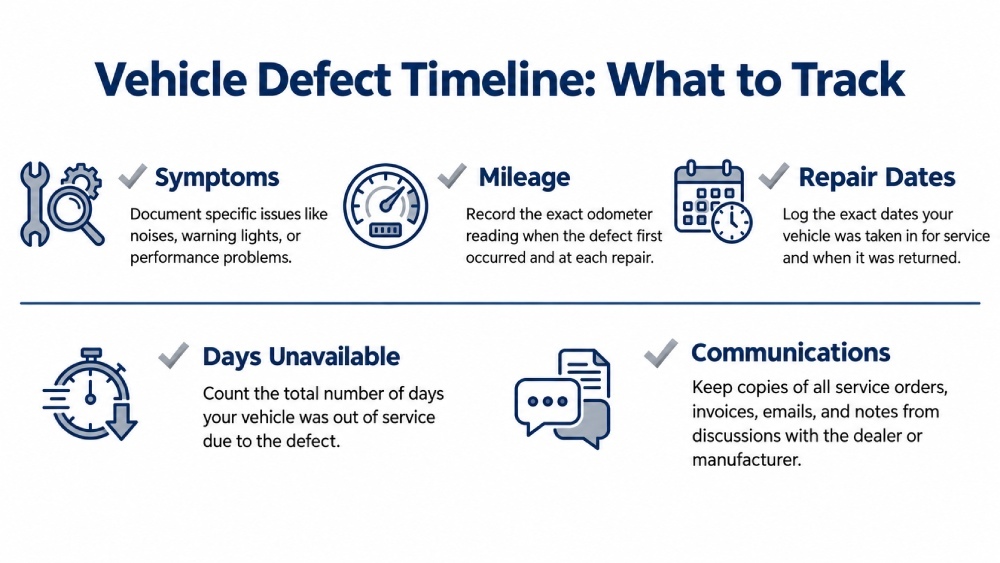
In addition to collecting original documents, maintain a chronological summary of the vehicle's problems. A timeline makes it easier to identify patterns and connect supporting evidence to specific events.
What to Include in Your Timeline
For every significant incident, record:
The date the defect first appeared
A description of the symptoms
The vehicle's mileage at the time
Dates of dealership visits and repair attempts
How long the vehicle remained unavailable
Whether the problem returned after repairs
Related communications and expenses
Reference the corresponding repair orders, photographs, receipts, and emails whenever possible. Keep the timeline factual and update it whenever a new issue or repair attempt occurs.
How to Organize Your Lemon Law Documents
Collecting paperwork is only the first step. A clear filing system can make the records easier to review when discussing the situation with a legal professional.
Consider creating separate folders for purchase documents, warranty information, repair orders, communications, expenses, and visual evidence. Use descriptive filenames that include the date and document type, and maintain a secure backup of important digital records.
Avoid altering original documents or deleting communications that seem unimportant. If a record contains an error, preserve the original and separately document the correction.
Conclusion
Building a lemon law case often requires more than showing that a vehicle has a defect. Organized documentation can help establish the vehicle's history, the nature of the recurring problem, the repair attempts made, and the manufacturer's response.
By preserving purchase agreements, warranty records, repair orders, maintenance documents, communications, expense receipts, photographs, diagnostic reports, and a detailed timeline, vehicle owners can create a clearer picture of their situation.
Because eligibility requirements, deadlines, and available remedies vary by jurisdiction, consider reviewing the documents with a qualified lemon law lawyer. A careful review can help determine which records are most relevant, whether additional evidence is needed, and what options may be available under the applicable law.
- lemon law
- lemon law case
- lemon law documents
- vehicle defects
- vehicle repair records
- warranty documents
- repair history
- lemon law claim
- vehicle maintenance records
- consumer rights
Think you've got a lemon?
Compare your situation to your state's requirements — and connect with a vetted lemon-law attorney for a free case review.